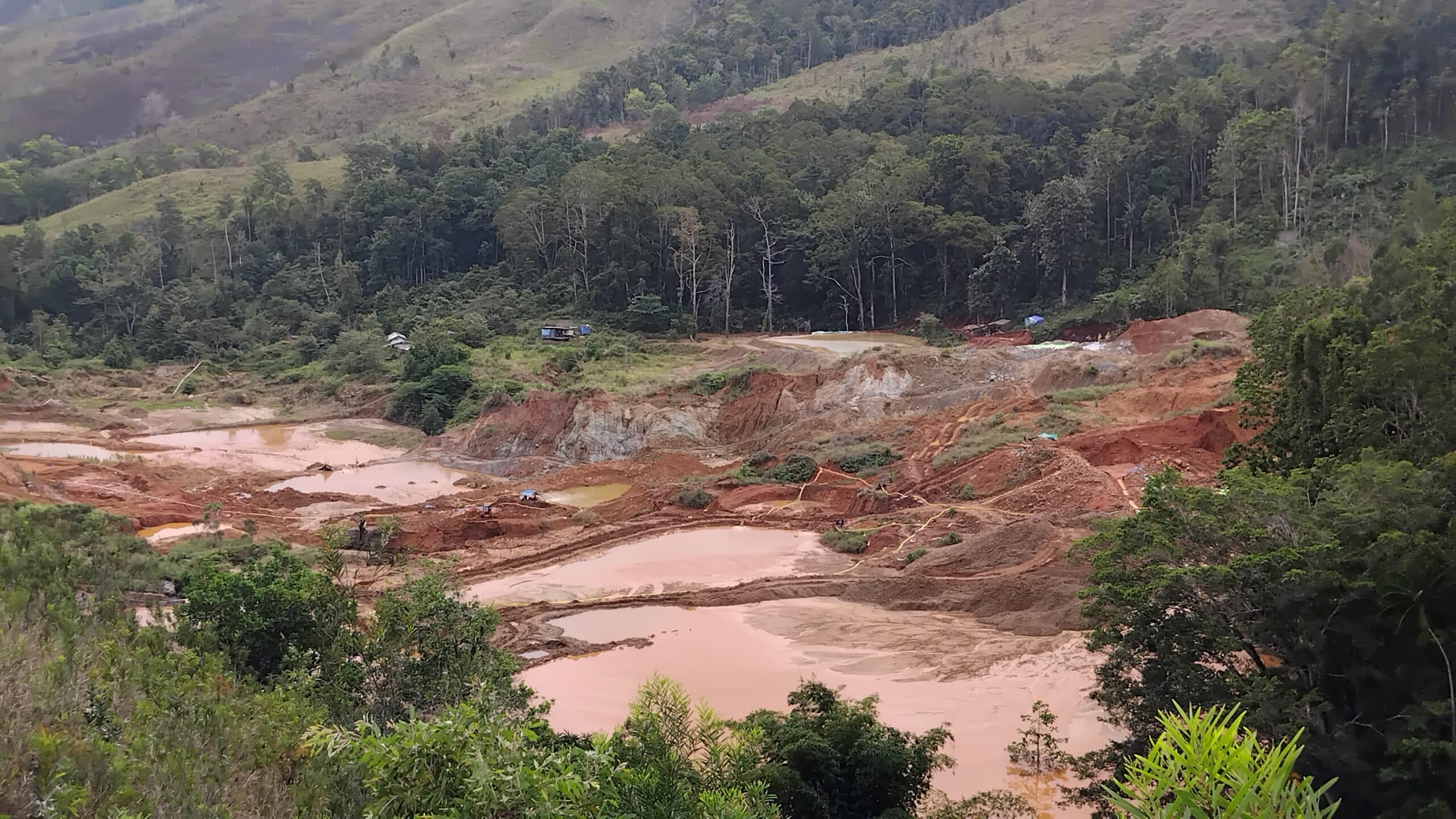
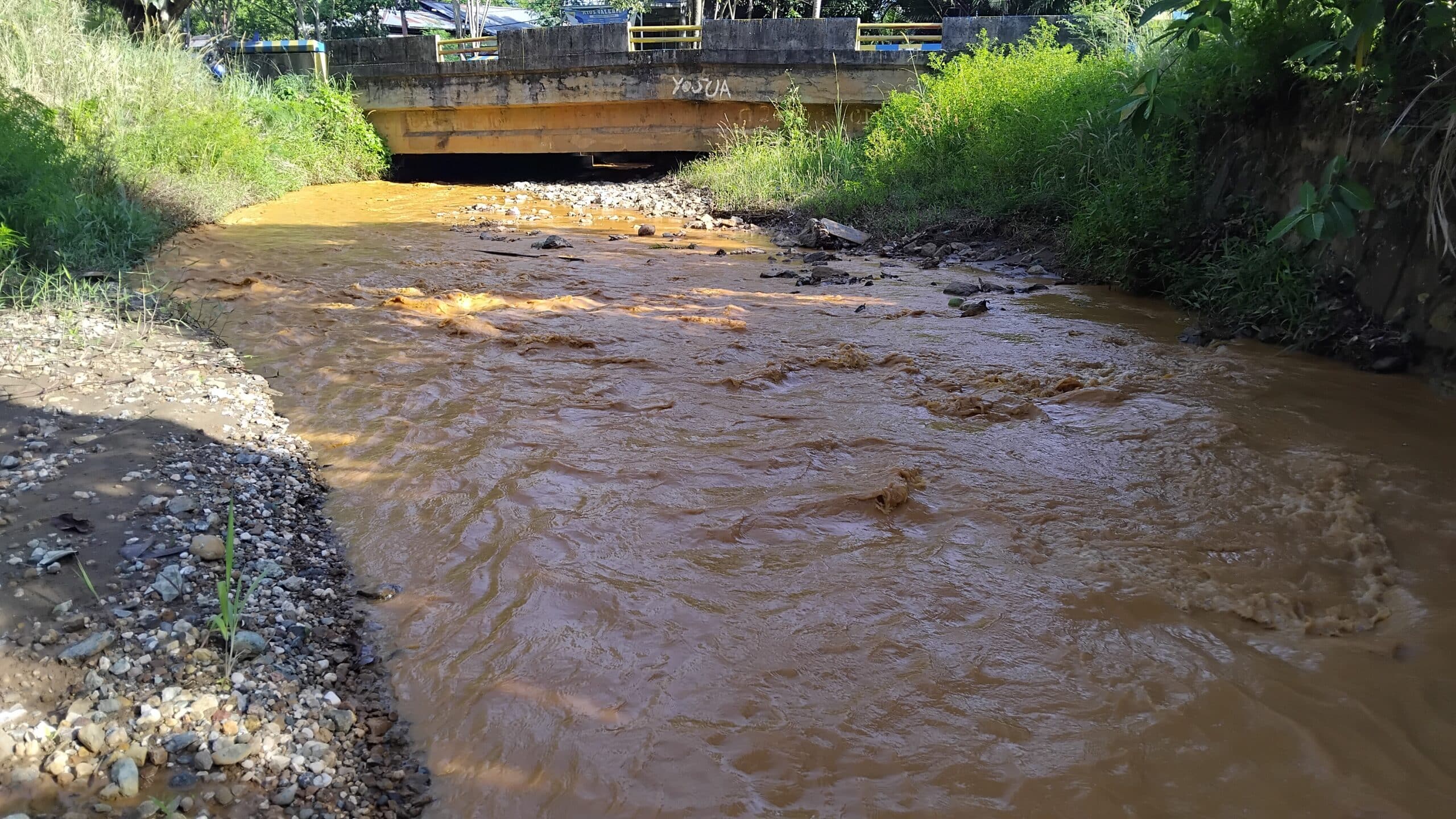
Jayapura, Papua — Murky, brown-coloured water from the Hubay River flows downstream into Lake Sentani in Jayapura Regency, Papua.
The river originates at the foothills of the Cycloops Mountains, on the border between Jayapura Regency and Jayapura City. The area is a nature reserve known for its rich biodiversity.
But Lake Sentani is now under threat from sediment generated by illegal gold mining upstream.
From the river’s upper reaches to its mouth, large amounts of sand, gravel, rocks and mud have accumulated, causing the river to become increasingly shallow. The sediment has also spread into the lake, including around Bridge II near the mouth of the Hubay River, where the waterway has become narrower.
Anggi Rivaldo Ohee, a resident of Asei Kecil village in East Sentani district, said the river had been deteriorating for around a decade.
“The river flows muddy every day, and sometimes it carries sediment into the lake,” he said on July 25, 2026.
Mr Ohee said the sediment had polluted Lake Sentani from Bridge II to the villages of Telaga Maya, Telaga Ria and Yoka.
The pollution has made it increasingly difficult for local residents to catch fish. Diving, net fishing and angling have all become less productive.
“Before the mining started, it was easy to catch fish. Since the mining began upstream, those of us living around the lake have struggled, especially to find fish. The lake is getting shallower every day because of the mining sediment flowing into it,” Mr Ohee said.
Gold mining activities in the area have been operating since 1999. The mining site is located around the Bumi Perkemahan (Buper) Waena area in Heram district, Jayapura City.
The mining is reportedly operated independently by customary landowners, while Indigenous communities living downstream in Sentani are among those experiencing its impacts.
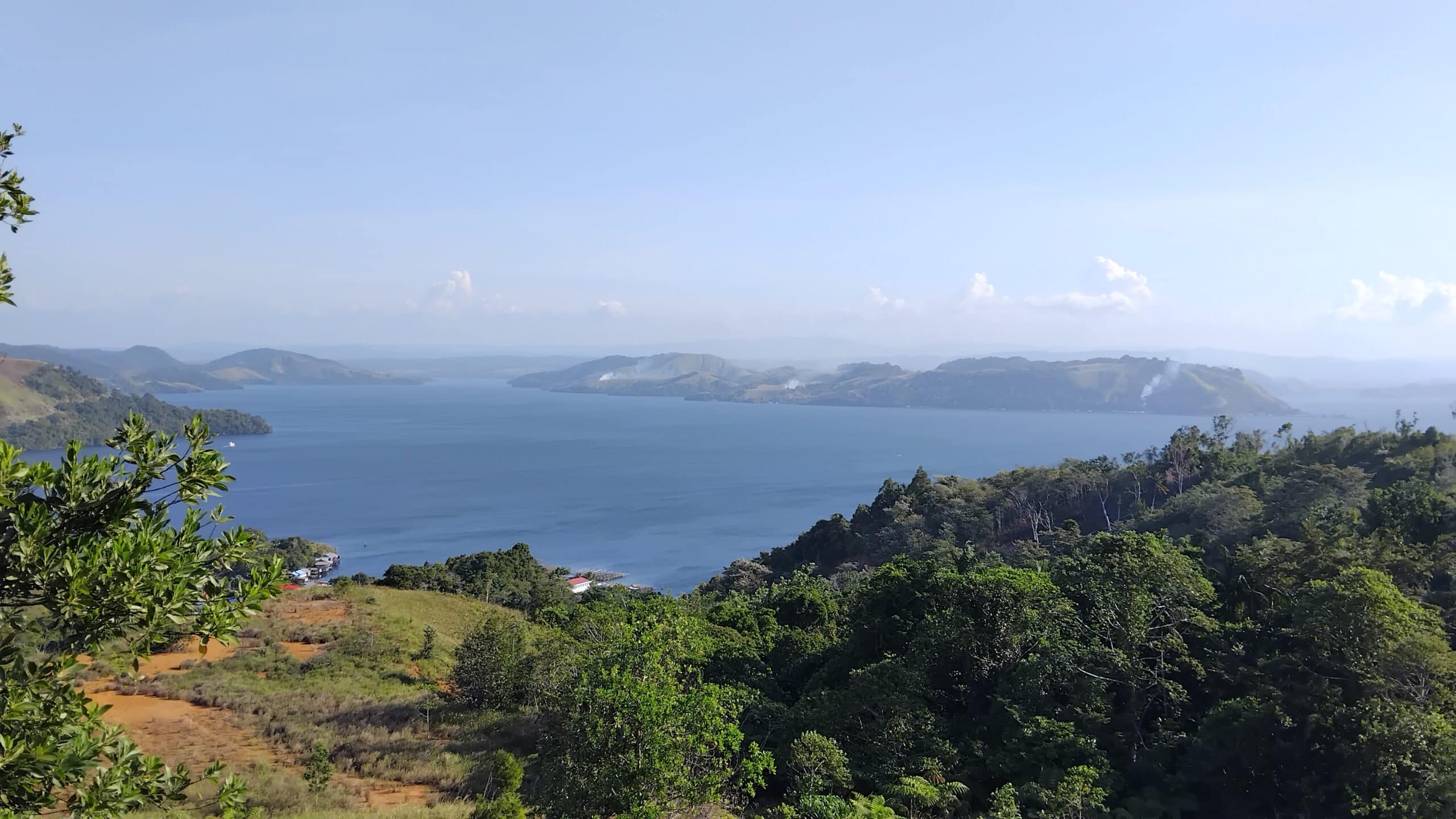
Lake Sentani is Papua’s second-largest lake, covering about 9,360 hectares. It stretches along the foothills of the Cycloops Mountains across Jayapura Regency and Jayapura City.
At least 24 villages around the lake depend on its natural resources for their livelihoods.
Mr Ohee said the water around the river mouth, near the border between Jayapura City and Jayapura Regency, was once clear and rich in fish.
Among the species commonly caught were carp, tilapia, eels, the invasive flowerhorn cichlid and kayou, the local name for snakehead fish.
As the lake’s water quality has deteriorated, Mr Ohee has had to take up work as a motorcycle taxi driver in addition to fishing.
He said fish that once lived around the river mouth had become increasingly difficult to find.
“Because it has become so shallow, there are no longer places for the fish to come up. We used to catch carp, tilapia and eels from the lake. Now they are difficult to find and very rare because it has become so shallow,” he said.
Hans Ohee, a member of the Sentani community, said the river at its mouth, near the border between Jayapura City and Jayapura Regency, was once clear and full of fish.
Mr Ohee lives in a traditional stilt house and has built a fish cage underneath it. The cage is located on the riverbank, where he previously took advantage of the river’s fast-flowing, clear water.
“Sometimes we catch fish in the lake for our own consumption. If we catch more than we need, we usually sell them. Now I’ve switched to using the fish cage for raising and breeding fish, but their growth has not been very good,” Mr Ohee said.
He said residents were now struggling to develop fish-farming businesses because of the polluted water.
“The fish used to be fat, but now they remain thin and underweight. There used to be plenty of snakehead fish around the river mouth too, but they have become rare because the water is muddy,” he said.

The fish cage has now become clogged with sediment.
Mr Ohee said the problem became worse during heavy rain, when large amounts of mud and other material were carried downstream, causing the river to overflow into nearby homes.
Residents have reported floodwaters reaching knee height.
“They are trying to make money and earn a living. But they also need to remember that there are people downstream who bear the risks,” he said in frustration.
Both Hans Ohee and Rivaldo Ohee have urged the government and security authorities to take action against mining operations in the upper reaches of the Cycloops Mountains.
They warned that if mining continues for another 10 to 20 years, sediment could spread further towards the middle of Lake Sentani.
“The mining is also a threat to the lake. We hope the government will stop the gold panning activities upstream, so people living along the river can continue to fish in the lake without facing these difficulties,” Mr Rivaldo Ohee said.
Heavy metal contamination linked to mining
An identification and assessment by environmental organisation Walhi Papua in November 2025 found extensive gold mining activity in the Buper Waena area of Jayapura City.
The operations reportedly use heavy machinery, including excavators, as well as dompeng machines — high-powered water pumps similar to alkon pumps.
Waste and sediment from the mining operations are then carried downstream through the river system.
“If heavy machinery is being used, mercury is still used as well because the two go together. Mercury is used to separate gold from rock, sand and water,” Walhi Papua director Maikel Primus Peuki said on July 27, 2026.
He said communities living along the river, around its mouth and near the lake had already lost access to clean water.
He also warned that mining waste could damage habitats and ecosystems within Lake Sentani.
“For example, native fish and other species in Lake Sentani, including gastor, tilapia and nila, are at risk of disappearing or declining because of waste discharge,” he said.
The most visible impact, he said, was sedimentation.
“Unfortunately, the less visible impact of mining activities involving mercury is what will happen to the fish living in Lake Sentani,” Mr Peuki said.
Henderite L. Ohee, Dean of the Faculty of Mathematics and Natural Sciences at Cenderawasih University, said the condition of Lake Sentani was significantly different from what it was in the 1990s.
He identified three major changes: habitat degradation, declining environmental quality and the introduction of non-native fish species into the lake.
“Lake Sentani has gradually narrowed, or lost part of its surface area, because of sedimentation and the accumulation of material around the lake,” he said.
He attributed the changes to erosion upstream, which has caused waterways and parts of the lake to become covered by sediment, as well as infrastructure development.
In 2025, researchers from Cenderawasih University conducted a study examining the ecological and human health risks associated with heavy metal contamination in Lake Sentani.
They tested six heavy metals — mercury (Hg), cadmium (Cd), lead (Pb), nickel (Ni), copper (Cu) and zinc (Zn) — at 11 locations, including the mouth of the river near Bridge II.
The study also examined six freshwater fish species, including both native and introduced species: Nile tilapia (Oreochromis niloticus), bonylip barb (Osteochilus vittatus), red devil cichlid (Amphilophus citrinellus), catfish (Arius velutinus), striped rainbowfish (Chilatherina fasciata) and red rainbowfish (Glossolepis incisus).
“The research showed that cadmium levels exceeded the threshold at all locations, while lead and copper concentrations remained below the threshold. Mercury, nickel and zinc were above the threshold at several locations,” the study found.
Although levels of mercury, lead, nickel, copper and zinc in sediment did not indicate an ecological risk at the time of the assessment, the ecological risk index indicated potential risks ranging from low to significant.
The study also found that some fish samples contained lead, cadmium, nickel and zinc above permitted thresholds.
“The metal pollution index was very high, indicating an accumulation of heavy metals, while the bioaccumulation factor ranged from moderate to high,” the researchers wrote.
The researchers said the risk was not present across all areas. However, the hazard index for heavy metals indicated that some fish species could pose a potential non-carcinogenic health risk to people who consume them.
Some fish samples were classified as presenting a significant risk associated with nickel and cadmium, indicating potential carcinogenic exposure risks for humans, particularly around the mouth of the Kampwolker River.
Referring to the study, Mr Henderite said that while mercury levels detected in fish were relatively low, regular exposure could still have implications for ecosystems and human health.
“Mercury is a particularly dangerous type of heavy metal. If people regularly consume fish containing mercury or other heavy metals, even at low levels, they can accumulate in the body over time. This can contribute to diseases, including cancer, which can be caused not only by mercury but also by other heavy metals,” he said.
Many people depend on Lake Sentani for their livelihoods. The lake serves important ecological, economic, tourism and transportation functions for communities living around it.
Data from Papua’s Fisheries and Marine Affairs Agency showed that in 2023, there were 892 capture fishers operating on Lake Sentani, across the western, central and eastern parts of the lake.
The annual catch was estimated at about 1,823.52 tonnes, compared with the lake’s total potential of 8,922.8 tonnes per year.
The lake is also one of Papua’s major centres for aquaculture.
Illegal mining allowed to continue?
Salmon Telenggen, head of the Jayapura Regency Environmental Agency, said the mining operations in Buper had not been designated as a People’s Mining Area (Wilayah Pertambangan Rakyat, or WPR) and did not have a People’s Mining Permit (Surat Izin Pertambangan Rakyat, or SIPRD) from the Papua provincial government.
As a result, the mining operations are considered illegal.
However, the site has reportedly been operating since around 1998, with customary landowners carrying out traditional mining activities.
Jayapura Regent Yunus Wonda has also said there are eight unlicensed mining operations in Jayapura Regency that do not contribute to local government revenue and will be subject to enforcement action.
“The mining operation in Buper is classified as unlicensed. Even though it is managed by customary landowners and has been operating for a long time, it does not have a permit,” Mr Telenggen said on August 6, 2026.
The Buper mining site is located near the buffer zone of the Cycloops Mountains Nature Reserve, an area where mining activities are heavily restricted and, under environmental regulations, prohibited.
Mining waste and sediment, along with soil erosion from excavation, mud, sand and land clearing upstream, are carried by rainwater into the river system and eventually into the lake.
Mr Telenggen said this posed a serious and immediate threat, with water quality declining significantly and pollution making the lake water unsuitable as a source of clean water.
Lake Sentani has effectively become a “giant holding tank” for waste, he said, with pollutants flowing into the lake. The lake has only one relatively narrow outlet, the Jaifuri River, while sedimentation continues to worsen.
“Severe sedimentation caused by mud and sand deposits from mining and upstream areas is reducing the lake’s depth and its capacity to hold water. Flooding is becoming more frequent in settlements around the lake,” he said.
He also warned of health risks for communities that bathe, wash clothes or consume lake water, saying they could be exposed to skin and gastrointestinal illnesses as a result of bacteria and hazardous substances from mining waste.
Mr Telenggen said the government would take action to control sources of pollution upstream, including enforcing restrictions on mining and land clearing in the Cycloops protected area and rehabilitating forest in the buffer zone to reduce erosion and sedimentation.
“The government, together with law enforcement agencies, must take action and impose penalties that deter those responsible, so that the 2019 flash floods are not repeated. Jayapura Regency is a disaster-prone area, and the Cycloops Mountains provide a source of life for people in both Jayapura City and Jayapura Regency,” he said.
But Mr Peuki of Walhi Papua said the government’s current efforts amounted to little more than talk because there had been no meaningful enforcement or monitoring.
He accused authorities of allowing the illegal mining activities to continue for too long.
“The mining area is getting larger over time and is moving towards the mountains, closer to the buffer zone of the Cycloops Nature Reserve. If this is allowed to continue, it is effectively a violation,” he said.
Mr Henderite said customary landowners should consider the future of Lake Sentani and the generations that would depend on it.
“If you care about your children, your relatives and your descendants, the mining should be closed. It is not only creating a threat through contaminated fish but could also eventually turn this lake into dry land,” he said.
“If erosion and material from mining continue to enter the lake, slowly but surely, this lake could become land.
“We cannot say it will happen in one or two years, but it could happen over the next five, 10 or 20 years. I understand that closing the mines would reduce people’s income, but if we think wisely about protecting the lake, then the best step is simply to close the mines.”
Hans Ohee said he was concerned that within 20 years, sedimentation could make the lake shallow across much of its area, including towards the middle.
He said local communities did not have the power to stop the process themselves and called on the government to protect the lake.
“The government needs to care about this situation. If the mining continues, the lake will continue to become shallower,” he said. (*)
This article was first published by Mongabay Indonesia.
https://mongabay.co.id/2026/08/27/ancaman-tambang-emas-ilegal-di-hulu-danau-sentani/