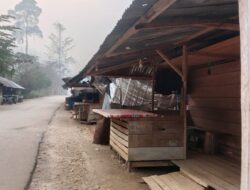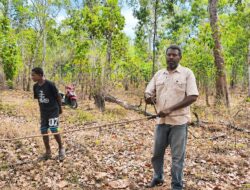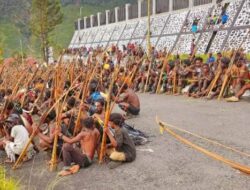
Sentani, Jubi – The Jayapura Regency Legislative Council’s (DPRK) Commission C has raised concerns over poor infrastructure and inadequate education and health facilities in Yoboi Village, Sentani District, Jayapura Regency, Papua.
The conditions were identified by Commission C during a working visit to the village on Wednesday (15/9/2026).
The commission, which oversees education, health, tourism, sports and the National Narcotics Agency (BNN), conducted the visit as part of discussions on the 2026 revised regional budget (APBD-P).
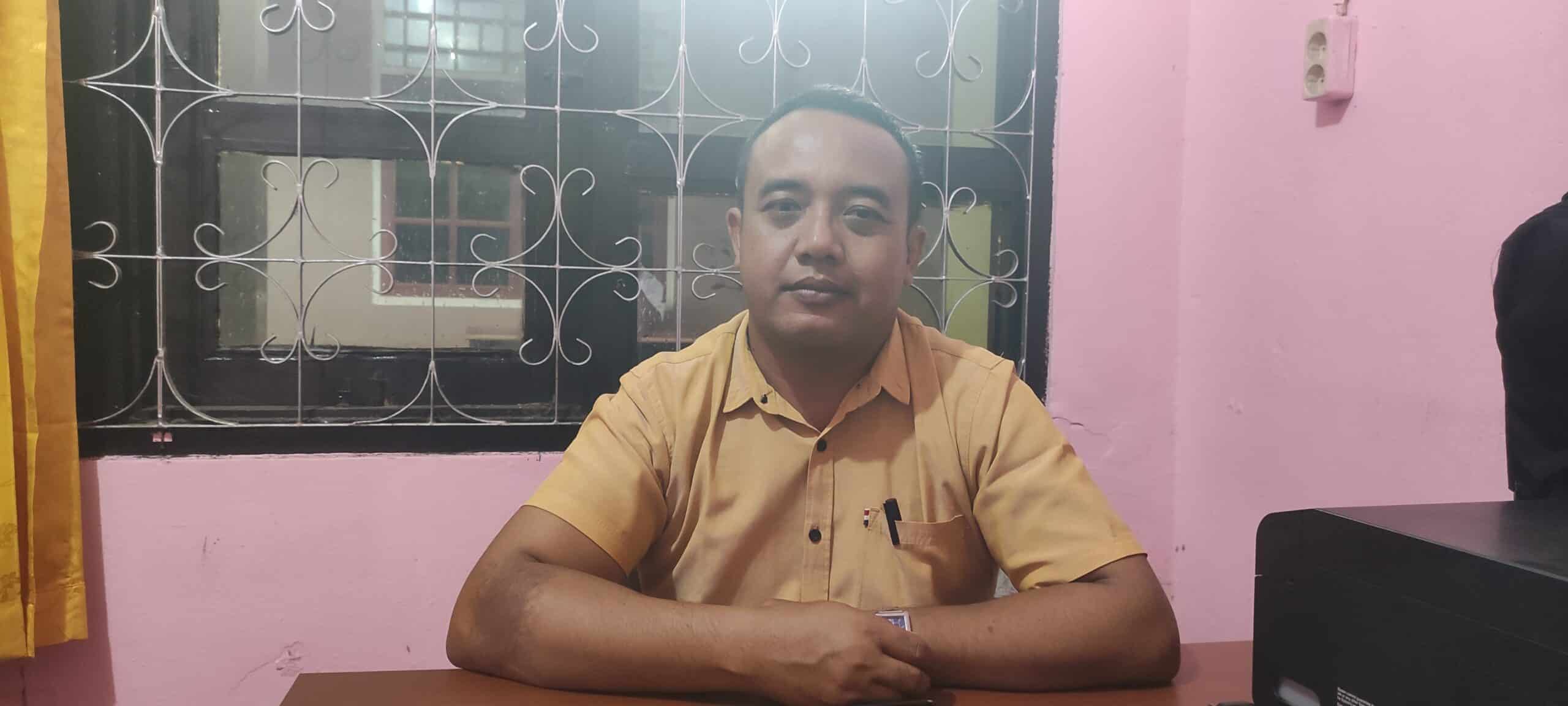
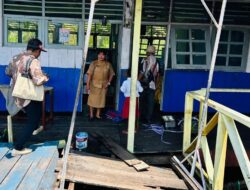
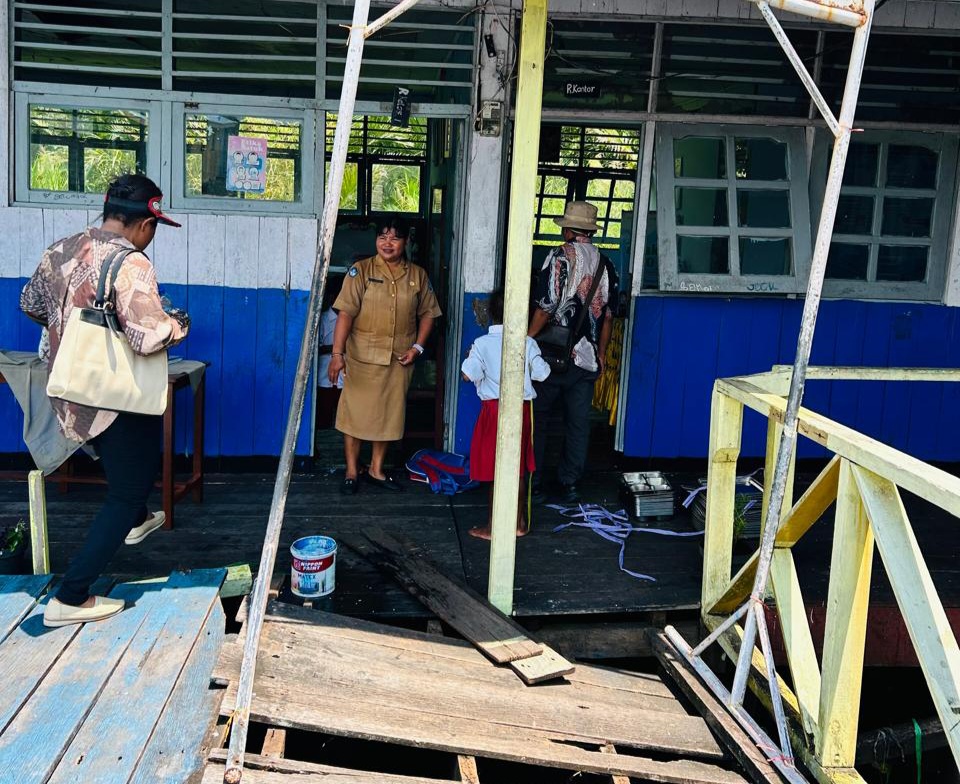
Commission C deputy chair Bob Banundi said the team found school buildings in Yoboi in a concerning condition.
Support columns were leaning and unstable, while the bridge or veranda at the front of the school was also close to collapsing.
Residents also reported that teaching and learning activities in Yoboi were not running normally.
At times, there were no classes even when it was not a school holiday. Teachers were also rarely present, possibly because of the condition of the school.
“Yoboi is a traditional village as well as a tourism village. Most of its infrastructure is built over water. Houses and public facilities such as schools and community health posts are built on stilts,” Bob Banundi said when met at the Jayapura Regency Legislative Council office on Thursday (24/9/2026).
He said Yoboi was not far from Sentani, the capital of Jayapura Regency. He therefore questioned why the village’s infrastructure had received so little attention from the local government.
Bob said the community health post, or Pustu, in Yoboi was in a similar condition to the school building.
The Pustu serves not only Yoboi residents but also people from several neighbouring villages along the shores of Lake Sentani.
He said the community’s concerns compiled by the commission would be discussed at the faction level within the council and could then be raised during deliberations on the 2026 revised regional budget.
Basic issues such as education and health services had also been repeatedly raised with relevant government agencies during public hearings, he said.
“The council is only carrying forward the community’s concerns and monitoring them, while the executive is responsible for implementing them,” he said.
Commission C member Purwanto said Yoboi, which has been designated as a traditional and tourism village, should have better public facilities capable of serving residents.
He said the village, which is frequently visited by both international and domestic tourists, should be maintained by the village government and residents who benefit from tourism.
“The condition of the infrastructure and facilities must be improved. The local government, through the relevant agencies, needs to take concrete steps to repair or renovate the existing buildings,” Purwanto said.
Another Commission C member, Siska Marweri, also expressed concern over the poor condition of public facilities in the village.
She said Yoboi might be the only village where almost all community activities take place away from the mainland.
The village also has a relatively comprehensive range of public facilities, including a school, Pustu, reading centre, nutrition garden, children’s playground, sports field and early childhood education centre (PAUD).
Siska said Yoboi should serve as an example for other villages along Lake Sentani.
“The local government, through the relevant agencies, must immediately repair or renovate facilities such as the school and Pustu so services to the community can resume properly,” Siska said.
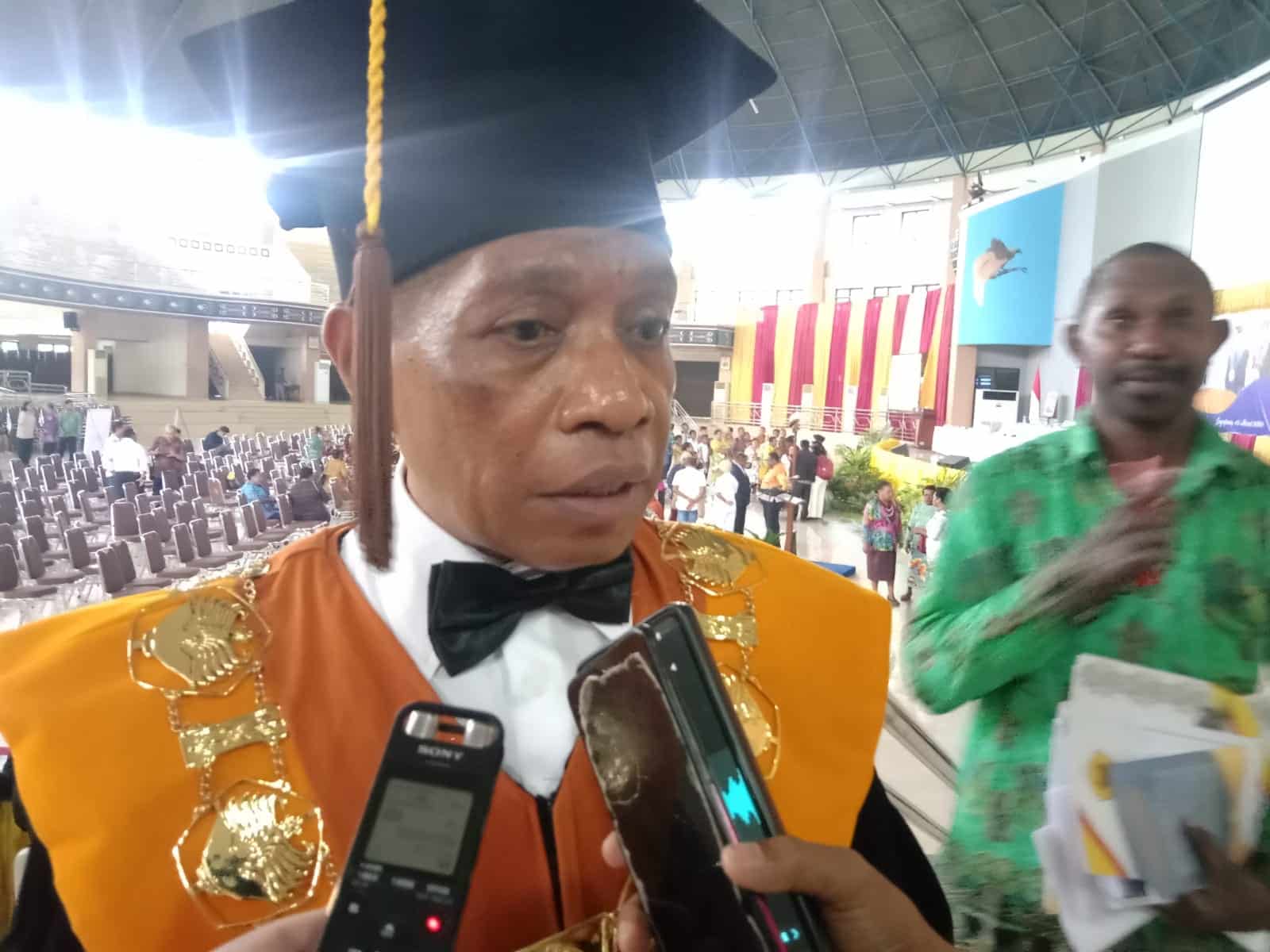
Meanwhile, Jayapura Regency Legislative Council Deputy Speaker I Piet Hariyanto Soyan said the condition of education infrastructure and facilities in Yoboi had already been raised by the council and proposed for improvement some time ago.
The proposals had been submitted during discussions of the regional budget between the legislature and executive, he said.
Soyan said that after council commissions conduct working visits, they generally hold public hearings with relevant government agencies, with findings from those visits becoming a reference for further discussions.
“The council’s role is limited to reporting what we find in the field and providing input on actual conditions, including community concerns and reports. The executive is responsible for carrying out the work,” Soyan said.
He said budget constraints could be a factor if repairs to buildings or the provision of desks, tables and chairs had not been carried out. However, such needs were not new proposals from the executive or schools.
“There are many schools at all levels across Jayapura Regency, so they cannot all be addressed at once. The work has to be carried out in stages at each school,” he said.
Soyan also pointed to village funding and School Operational Assistance (BOS) funding, which can be allocated to education purposes under existing regulations.
He said the legislature was not seeking to determine who was right or wrong. Rather, the shared goal was to create an education system that upheld the dignity of students and communities.
The aim, he said, was to produce human resources capable of competing across different fields. He questioned whether community proposals, school requests and recommendations from council hearings were actually being followed up.
“This also raises a question. The relevant agencies should not simply stay inside their offices. They should go into the field and see the situation directly on a regular basis,” he said.
Soyan, who previously served as chair of Commission C, said there were also solutions that could be implemented by communities and schools themselves.
He said village governments could allocate 30 per cent of village funds (ADK), which are distributed in stages, to education. Schools could also use BOS funding allocated according to student numbers.
Schools in urban areas receive more BOS funding because they have larger enrolments, with some receiving billions of rupiah for around 1,000 students.
“In villages, the number of students is generally below 500. The funding can be used gradually because each student receives around Rp1 million in BOS funding. If there are 300 students, that would amount to Rp300 million. School committees can use it because BOS funding can cover the purchase of desks, chairs and tables,” Soyan said. (*)