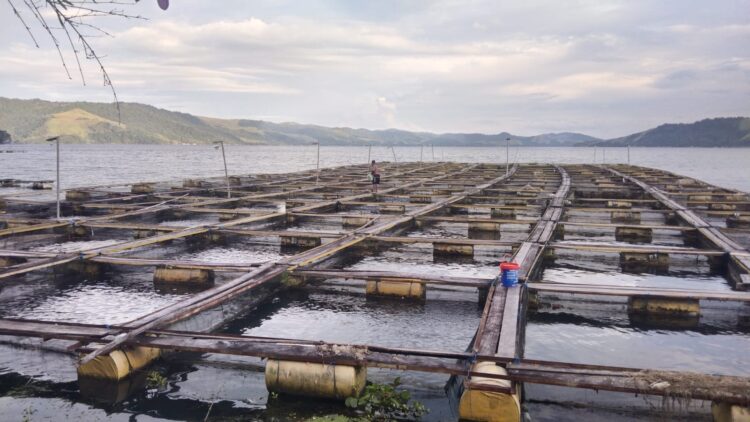
Jayapura, Jubi – Fish habitats in Lake Sentani, in Jayapura Regency, Papua, are under mounting ecological pressure from land conversion, pollution and invasive species.
The tectonic lake, beneath the Cycloop Mountains, was once a safe haven for a diverse range of fish species. A 2017 study titled Fish Diversity in Lake Sentani, published by Lasmining Pujiyani Astuti, Chairulwan Umar and Andriwarsa, recorded 33 fish species in the 9,630-hectare lake. Thirteen of those species were native to Lake Sentani.
Five fish species are endemic to Papua: _Anus sp., Neosilirus novaeguineae, Chilatherina sentaniensis, Glossolepis incisus_ and Glossogobius koragensis. The lake is also home to the largetooth sawfish (Pristis microdon), considered the world’s only freshwater shark.



Lake Sentani is also home to several introduced fish species, including Nile tilapia (Oreochromis niloticus), bonylip barb (Osteochilus vittatus), red devil cichlid (Amphilophus citrinellus), catfish (Arius velutinus), barred rainbowfish (Chilatherina fasciata) and red rainbowfish (_Glossolepis incisus_).
Lake Sentani has long supported freshwater fish farming. Papua provincial government data records 542 fish cages operated by 274 cage fish farmers. In recent years, however, the lake’s fish biodiversity has come under increasing threat from the dominance of one introduced species: the red devil cichlid (Amphilophus citrinellus).
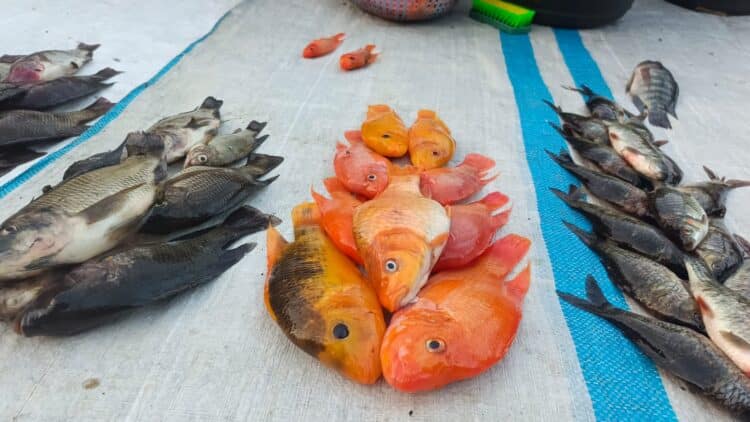
Red devil fish have become dominant in the lake, often eating feed intended for fish raised in cages and, in some cases, entering the cages to prey on farmed fish. The fish, locally known as “louhan”, are now easily spotted from the shores of Lake Sentani, a sign of their growing population.
Fish farmers have had to adapt to the growing presence of red devil fish. Edi, a fish farmer in Lake Sentani, abandoned fixed fish cages and ponds because they were vulnerable to red devil invasions.
Edi has operated a fish-farming business near Telaga Ria in Jayapura Regency for 10 years, raising tilapia and Mozambique tilapia. He operates 117 cages in waters leased from a local landowner. He now uses floating cages fitted with buoys that rise and fall with changes in Lake Sentani’s water level.
“With fixed cages, when the lake level rises, the nets can become submerged, making it easier for louhan to get in and eat the fish,” Edi said when Jubi visited his cages on Thursday, 25 June 2026.
“The louhan especially get into cages or ponds where we raise young tilapia and catfish.”
Edi sources young Mozambique tilapia from Koya in Muara Tami District, Jayapura City. He raises the fish in his cages before selling them either as fingerlings or for consumption.
To feed the fish in his hundreds of cages, Edi needs about 200 kilograms of feed every day. He sells the harvested fish for around Rp80,000 per kilogram.
As a supplier to several restaurants, Edi must meet their preferred fish sizes.
“We have to control the size of the fish. Restaurants sometimes don’t like tilapia that are too big. They want them roughly three or four fingers in size,” Edi said.
Declining habitat for native fish
Edi is not the only fish farmer struggling with the spread of red devil fish. Yan Flanig Pulalo, 34, an Indigenous resident who makes a living fishing and raising fish in cages on Lake Sentani, has also seen the species become increasingly dominant.
He fears native fish, including Lake Sentani’s native black gudgeon (Oxyeleotris heterodon), could eventually disappear as red devil fish take over their habitat.
“When I was a child, I used to go fishing in the lake and we could still find native Sentani gudgeon and other native fish. Now, when we fish in Lake Sentani, we mostly catch louhan,” Yan Pulalo said at his home on Wednesday, 22 July 2026.
He said Indigenous communities living around Lake Sentani first noticed the invasive red devil fish while diving for fish, a traditional fishing method known as molo. At first, the fish were unfamiliar to local residents. Over time, however, their numbers increased sharply, displacing native species such as hewu, gete-gete and the native Sentani gudgeon.
Pulalo’s concerns are also reflected in a study by three researchers from the Centre for Fisheries Resources Management and Conservation Research Chairulwan Umar, Endi Setiadi Kartamihardja and Aisyah in a report titled The Impact of Invasive Red Devil Fish (Amphilophus citrinellus) on Fish Diversity in Inland Public Waters in Indonesia.
The report states that red devil fish were first recorded in Lake Sentani in 2005 and have become increasingly dominant since then.
It also found that the growing red devil population has contributed to a decline in the black gudgeon population. The fish is highly sought after in local markets and commands a relatively high price. According to the report by Umar and his colleagues, red devil fish account for about 45 per cent of the fish caught in Lake Sentani.
Pulalo said it had become increasingly difficult to catch black gudgeon.
“In the past, if someone ordered gudgeon, no matter how much they wanted, we could go out from the evening until morning and get them. But since the louhan appeared, the gudgeon have gradually disappeared,” he said.
He also said the native Lake Sentani fish known locally as hewu had become increasingly difficult to find.
Pulalo once operated fish cages where he raised Mozambique tilapia and catfish. But after red devil fish appeared, the fish in his cages were gradually eaten by the “red devils”.
When he fishes with a net, red devil fish are often caught in it. Removing them can take hours because so many become entangled in the nets.
The problem is compounded by the species’ low market value compared with native Lake Sentani fish. Red devil fish are rarely sold individually or in bundles. Instead, they are generally sold in piles or by the bucket.
“Their market value is low. Sometimes a pile sells for only Rp20,000 to Rp30,000. If someone orders Rp100,000 or Rp200,000 worth, we give them a large bucket full. They are very easy to catch, so the price is low,” he said.
By comparison, native Lake Sentani gudgeon fetches a much higher price. A bundle of 12 fish can sell for Rp200,000.
In the past, fishermen could easily catch six to 10 native gudgeon. Now, they have to dive to depths of six to seven metres or make artificial shelters using cement sacks filled with rocks to catch them.
Customers must also place orders up to three days in advance if they want native Lake Sentani gudgeon.
Because red devil fish make sorting his catch more difficult, Pulalo now focuses on catching sembilang catfish as his main source of income. He only catches louhan, Mozambique tilapia and native gudgeon when customers place specific orders.
Pulalo said he did not know how to reduce the red devil population in Lake Sentani.
“Eliminating them completely would be very difficult. The solution depends on us. If we regularly set our nets, we can reduce their numbers a little. But if we leave them alone, there will be even more of them in the future,” he said.
Turning an invasive species into an opportunity
Although considered a pest because it preys on fish raised in cages and native Lake Sentani fish, red devil fish can also provide an income for local residents.
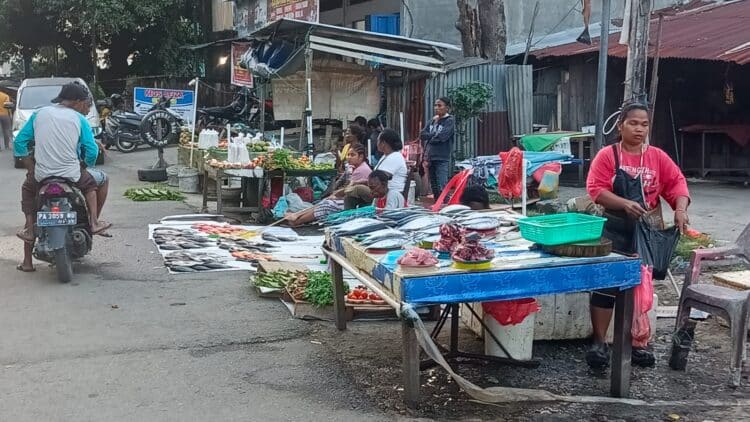
Maria Ongge, 45, who has sold fish across from the Cultural Park in Waena, Jayapura City, for about 20 years, said demand for red devil fish had been growing. However, she said they remained cheaper than Mozambique tilapia, and especially native gudgeon.
“More people are looking for louhan now. At first, people didn’t know what they tasted like and weren’t very interested. But after trying them, more people started buying them,” Maria said at her stall on Wednesday, 26 August 2026.
Maria said red devil fish had a different taste from Mozambique tilapia. While tilapia has slightly sweet-tasting flesh, red devil fish tend to have a milder flavour. Despite this, the fish remain popular, particularly for grilling.
Maria also complained about the aggressive nature of red devil fish in Lake Sentani. She said Mozambique tilapia that escaped from fish cages could become prey.
“The eyes of tilapia are often eaten by louhan. The fish are still fresh, but parts of them are damaged after being attacked,” she said.
Red devil fish in Lake Sentani vary in colour. Along with the red variety, there are black, yellow and pink fish. Their colour variations are influenced by their habitat and the food available in the lake.
Pink louhan are usually found in the middle of Lake Sentani, while yellow and red varieties are often found around fish cages, feeding on leftover food intended for farmed tilapia.
To meet customer demand, Maria sources red devil fish from her own catches and buys them from fishermen she regularly works with. The fresh fish are caught each day and sold directly from roadside stalls.
Red devil fish are generally sold in piles or bundles. A pile containing about five or six fish can sell for between Rp50,000 and Rp150,000, depending on their size.
“I can sell more than 10 piles a week. The price is relatively cheap compared with other fish,” Maria said.
Although demand fluctuates, Maria said there were always customers for red devil fish. The daily sales provide her with a modest income.
“It depends on the size of each pile. Sometimes I can make up to Rp300,000 a day,” she said.
Dimas, a local resident who was buying fish when Jubi visited, said he bought red devil fish because he wanted to try them.
“I just want to know what they taste like, whether they are similar to tilapia or the usual Nile tilapia,” he said.
Reorganising Lake Sentani
Papua Provincial Marine and Fisheries Agency head Iman Djuniawal said Lake Sentani had a unique but vulnerable hydrological system.
The lake has 17 inflowing waterways but relies on a single main outlet in the Jefuri area. This means the lake’s water level can rise sharply, particularly during periods of heavy rainfall and as water absorption capacity in the surrounding mountains declines.
The situation is compounded by widespread logging downstream from Jefuri. Deforestation risks blocking and narrowing waterways used to release water, potentially triggering flash floods in nearby residential areas.
Flooding is not the only threat. The lake’s natural water quality is also facing significant disruption.
An upwelling phenomenon in which water masses are displaced because of differences between warm surface water and colder water at the bottom of the lake is increasingly bringing potentially toxic gases from the lakebed to the surface.
An imbalance between the lake’s environmental capacity and pressure from fish farming beyond that capacity is believed to be a major factor behind the deteriorating water quality.
The decline in environmental conditions is directly affecting native Lake Sentani species. Endemic fish such as the red rainbowfish (Glossolepis incisus), gobies and kaskadu are now facing the threat of extinction.
Native fish are also under increasing pressure from intensive farming of Mozambique tilapia and common carp, as well as invasive predatory species such as snakehead (Channa striata) and red devil fish.
Addressing the ecological crisis requires stronger management of Lake Sentani. The Papua Provincial Government is expected to play a facilitating role, while the Jayapura Regency and Jayapura City governments have direct authority over inland waters.
Regulations protecting the Lake Sentani ecosystem need to be strengthened, with limits placed on activities so they do not exceed the lake’s environmental capacity. Both fish farming and capture fishing need to be reorganised to maintain the lake’s ecological balance and ensure its long-term sustainability.
“Why can red devil fish dominate now? There must have been a way they were introduced or a point from which they entered. Their growth is even more aggressive than that of snakehead, which has long been considered a top predator in Lake Sentani,” Iman said.
Red devil fish are difficult for other fish to prey on because of their hard dorsal fins. Iman said other measures were therefore needed to reduce their population.
“For example, they could be caught and processed into some kind of product, perhaps snacks, so that the local economy can also benefit,” he said.
Iman said his agency’s role was limited to facilitating the reorganisation of how Lake Sentani is used. The Jayapura Regency and Jayapura City governments, he said, have authority over fish-farming activities in the lake.
He said efforts were also needed to restore the population of native Lake Sentani black gudgeon.
According to Iman, fish-farming productivity in Lake Sentani has also declined. Production increased when local governments introduced dedicated fishery programs in the lake.
“But after those programs ended, there was no longer much sustainable development. Only a few operators have continued,” he said. (*)