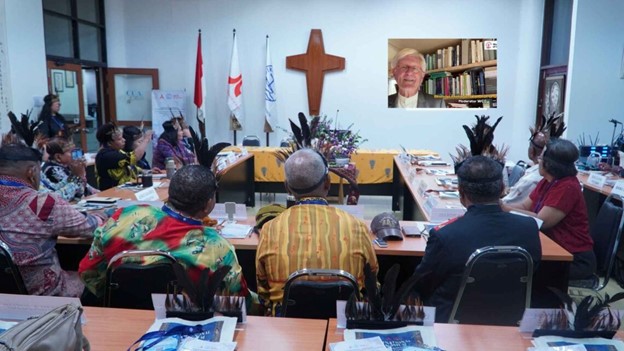
Jayapura, Jubi – A symposium of Asian churches has called for an end to violence in Papua through a declaration adopted at an international meeting in Chiang Mai, Thailand.
Papua was not simply a subject of discussion at the symposium. Its representatives brought their own experiences and voices to the gathering.

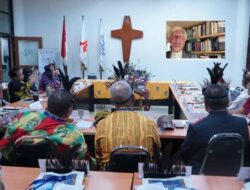
The International Symposium on Papua opened on 28 September 2026 with a period of contemplation rather than speeches or policy presentations.
Participants were surrounded by symbols of Papuan identity, including noken, betel nut and areca nut, and traditional Papuan fabrics. The sound of tifa drums accompanied a worship service led by Reverend Lenta Enni Simbolon, Deputy General Secretary on the Communion of Churches in Indonesia (PGI).
The cultural symbols were intended to bring Papuan life, community, identity, dignity and cultural voice into the ecumenical gathering.
Reverend Lenta encouraged participants to engage with Papua’s struggles by first listening to, feeling and mourning the suffering experienced by its people before discussing strategies for responding it.
Drawing on Nehemiah 2:17-18 from the Old Testament and Galatians 6:2 form the New Testament, Reverend Lenta reminded churches of their responsibility not to turn away from destruction and suffering.
She said that lament should not end with grief but could become a pathway towards the courage needed to rebuild.
“We gather in Chiang Mai today because of an urgent humanitarian call. From the ancestral land of Papua, we bring the dust of displacement, the laments of mothers in the interior, the cries of children whose futures have been cut short, and the blood and tears that have for too long soaked the land blessed by God,” Reverend Lenta said in her reflection, as quoted by pgi.or.id.
A commitment to choosing life
Four days later, on 1 October 2026, the symposium concluded with the reading of The Chiang Main Ecumenical Declaration for Papua.
The declaration was the outcome of the meeting organised by PGI and the Christian Conference of Asia (CCA) under the same there, “Choosing Life: Strengthening the Role of Churches in Humanitarian Protection, Justice, and Peace in Papua.”
The theme was drawn from Deuteronomy 30:19: “Choose life, so that you and your descendants may live.”
The symposium used the biblical passage as a starting point for a broader question: what should churches do when human life remains under threat?
The declaration describes Choosing Life not simply as a theological imperative, but as an ethical commitment for churches.
It calls on churches to oppose violence and death, protect human dignity, defend vulnerable people, care for the land and creation, and work towards justice, reconciliation and peace.
Papua speaks for itself
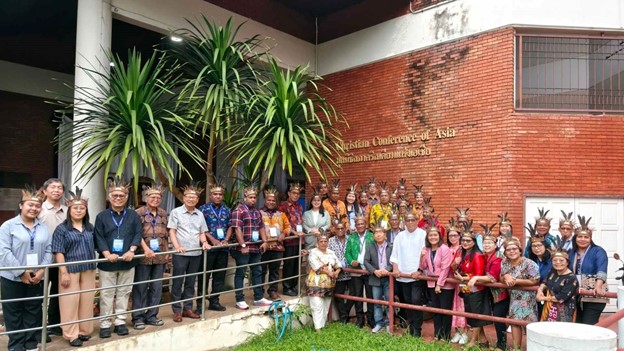
About 40 people attended the symposium, including church leaders from Papua and other parts of Indonesia, regional and international ecumenical partners, Indigenous representatives, women and young people, academics, researchers, humanitarian workers and peace advocates.
Representatives from Papua included members of the Fellowship of Evangelical Churches in Papua (PGIW Tanah Papua), the Evangelical Christian Church in the Land of Papua (GKI-TP), the Kingmi Church of Papua, the Indonesian Christian Evangelical Church (GKII), the Protestant Church in Indonesia (GPI) Papua, the Indonesian Bible Christian Fellowship Church (GPKAI), the Holy Word Christian Church (GKKK), and the Fellowship of Churches in Papua (PGGP) Papua and West Papua.
Representatives of the Papuan People’s Council, women’s rights activists, academics from Cenderawasih University and several theological colleges in Papua also attended.
The range of denominations represented was significant. Through the participation of its churches, Papua was not simply presented as an issue for others to discuss. People from the region brought their own experiences, concerns and perspectives directly into the Asian ecumenical forum.
These perspectives were joined by representatives of international ecumenical organisations and networks, including the World Council of Churches (WCC), the World Communion of Reformed Churches (WCRC), the Christian Conference of Asia (CCA), Kerk in Actie, Mission 21 and the United Evangelical Mission (UEM). Young people were represented by the World Student Christian Federation (WSCF).
The General Chair of the Communion of Churches in Indonesia (PGI), Reverend Jacklevyn Frits Manuputty, described the symposium as an important milestone in the PGI’s advocacy work on Papua.
He said regional and international ecumenical networks needed to be strengthened so the concerns of Papuan churches and communities could reach a wider audience.
“PGI believes it is important to bring the genuine voices of Papuan people and churches in Papua to an international platform of churches in Asia. Papua’s voice should not simply be represented by others, but heard directly,” he said.
For Jacklevyn, the theme Choosing Life also carries practical responsibilities for churches.
“Choosing life means affirming the dignity of every human being, protecting vulnerable people, seeking justice and working for peace. Churches cannot simply stand by when human life is under threat. They are called to listen to those who are suffering, speak the truth courageously, strengthen humanitarian work and create space for fair and dignified dialogue,” he said.
Solidarity begins with listening
Support for the symposium also came from international ecumenical networks.
The Moderator of the Central Committee of the World Council of Churches, Bishop Professor Dr Heinrich Bedford-Strohm, expressed the WCC’s solidarity with churches and communities in Papua.
He said churches were called to be present in practical ways amid human suffering and to turn solidarity into responsible action.
A similar commitment was expressed by Peter Prove, Director of the WCC’s Commission of the Churches on International Affairs.
The messages reflected a view that the situation in Papua is not solely the responsibility of churches in Papua or Indonesia. It is also part of the broader calling of churches around the world to uphold life, human dignity, justice and peace.
CCA General Secretary Reverend Jung Eun Grace Moon said solidarity begins with listening.
She called on churches and ecumenical partners to create space for people directly affected by violence, displacement, loss of homes and other consequences of the humanitarian crisis.
In this context, solidarity does not mean speaking on behalf of Papuan communities or taking control of their advocacy. Instead, it means walking alongside them and ensuring their experiences are heard in regional and international discussions.
WCRC General Secretary Reverend Philip Vinod Peacock also described the symposium as an important space for hearing from Papuans.
He reaffirmed the WCRC’s commitment to walking alongside Papuan communities experiencing suffering.
Five calls to action
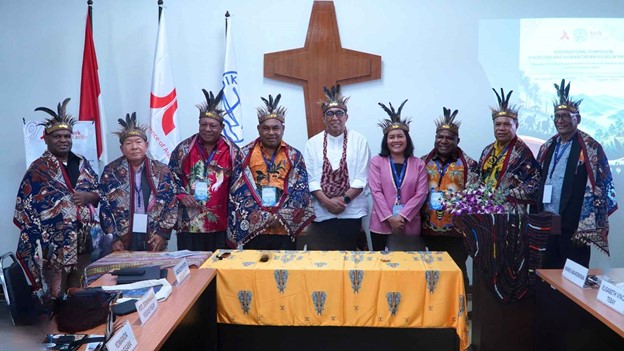
After days of dialogue and testimony, the commitments made at the symposium were set out in a formal declaration.
The document expressed deep concern about the suffering of Papuan communities as a result of armed violence, displacement, loss of life, fear, threats to Indigenous land and livelihoods, and environmental destruction.
Participants also acknowledged the risk that repeated violence could eventually come to be regarded as normal.
The declaration sets out five calls to action.
First, all parties involved in the conflict in Papua are urged to end violence, protect civilians, and uphold human rights and the dignity of every person.
Second, the humanitarian and displacement crises must be addressed in a coordinated way. The government, churches, HONA (Humanitarian Outreach to Need Assistance initiative) and humanitarian partners are encouraged to ensure reliable data is available, along with basic services protection for vulnerable groups and support for affected communities to recover.
Third, the declaration calls for religious and humanitarian dialogue grounded in faith and Indigenous traditions.
Participants said the situation in Papua cannot be addressed through a security-based approach alone. They called for dialogue that is honest, equal, inclusive and dignified, with meaningful participation from Papuan communities.
Fourth, the rights of Indigenous Papuans to their land, identify, culture, and traditional livelihoods must be protected.
The declaration says development policies and natural resource management must respect those rights, ensure meaningful participation, protect the environment and uphold the principle of Free, Prior and Informed Consent (FPIC).
Fifth, the humanitarian crisis in Papua must receive sustained attention from international ecumenical networks.
Churches around the world and regional and global ecumenical networks are encouraged to strengthen evidence-based advocacy, using verified information, and ensure that the perspectives of Papuan churches and communities are represented directly in international ecumenical forums.
Not an end point
For participants, the declaration is not an endpoint. Instead, it provides a framework for turning solidarity into action.
Churches and ecumenical partners have committed to supporting communities displaced or affected by conflict, strengthening peace and reconciliation education in churches, schools, and communities and ensuring women, children and your people have meaningful roles in humanitarian action, peacebuilding and decision-making.
The commitments will be implanted thorough HONAI. PGI, CCA, WCC and the wider ecumenical network are also expected to translate the declaration into pastoral support, practical solidarity and accountable action.
The journey that began with a period of contemplation on the first day of the symposium had taken on a more concrete form.
The lament brought from Papua did not remain an expression of grief. It became a shared awareness, a commitment to solidarity and a call to action.
In Chiang Mai, the churches chose not to allow Papua’s suffering to remain unheard.
“From Chiang Mai, we choose life”, to end violence, protect life, genuinely listen to the voices of Papuan communities, pursue justice and refuse to allow their suffering to continue in silence. (*)