Jayapura, Jubi – More than 125,000 people have reportedly been displaced by escalating armed conflict in West Papua, although the actual number is likely to be higher.
A recent report by Human Rights Monitor said military operations and armed violence have been particularly intense this year in the central highlands of the Indonesian-controlled Papua region, Jubi reported, citing RNZ Pacific on Friday (25/9/2026).
Indonesian security forces have been engaged in ongoing fighting with small groups of guerrilla fighters from the West Papua National Liberation Army (TPNPB) in the mountainous interior of Papua.
An Indonesian senior lecturer and Southeast Asian conflict researcher said civilians caught in the conflict were bearing the greatest burden.
Caught in the Middle
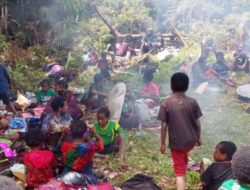
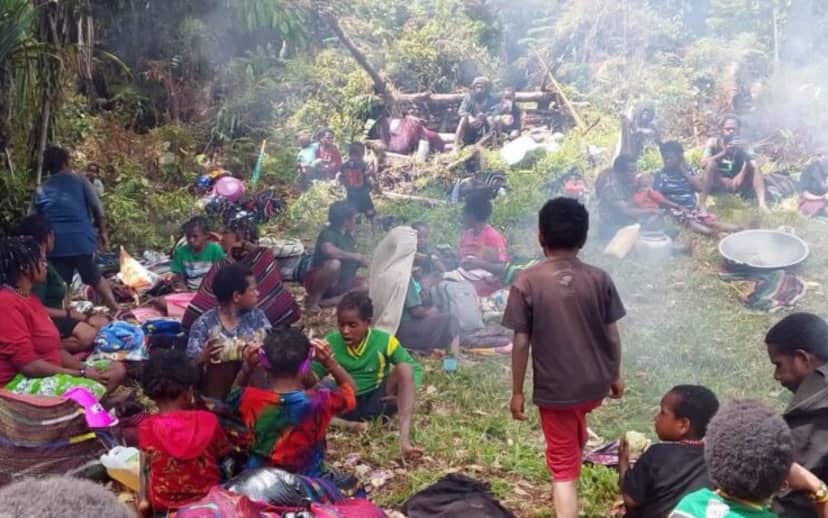
Indonesian researcher Hipolitus Wangge said many internally displaced people (IDPs), including Indigenous communities, had fled their villages and were forced to live in forests with limited access to supplies.
He said the “cycle of violence in West Papua” showed no signs of ending soon and warned that more people could be displaced.
“Both sides are busy claiming victory and asserting control over territory and their populations, which only keeps the tensions going,” Wangge said.
“Without signs of talks or mediation, communication and confidence-building, people living in these conflict zones will continue to be caught in the middle.”
The Human Rights Monitor report documented dozens of armed clashes during the second quarter of this year that directly affected civilians, including drone attacks, exchanges of gunfire between forces and villages being burned.
A recent report from Yahukimo Regency said civilians continued to be caught in shootings involving security forces.
Wangge said those who were not killed or injured in the conflict were often forced to flee.
“You will find districts such as Mimika, Nduga, Yahukimo, Puncak and Intan Jaya being described as conflict hotspots. People have tried to live outside the main areas of fighting,” he said.
As described in the report, once civilians are displaced to makeshift camps in the forest, a lack of resources, particularly access to healthcare, can lead to further deaths.
“Many internally displaced people are still living in the forest. So they have to survive in these very limited circumstances, living in the forest with very limited supplies of basic necessities,” Wangge said.
Civilians on Both Sides
Wangge said people could feel trapped between Indonesian forces and Papuan independence fighters.
He noted particular risks to civilians following reports that Papuans suspected of being informants for Indonesian security forces had been tracked down and killed.
“They cannot simply choose one side or the other, because both sides also have the potential or capacity to target these civilians,” he said.
“So they just have to leave and try to find somewhere safe because of the fear, the ongoing trauma and the instability in the West Papuan highlands,” he said.
For Indigenous communities, the consequences of the conflict are immediate: homes are abandoned, villages are emptied, families are separated and communities are forced into forests in search of safety.
However, Wangge said the exact scale of displacement was impossible to determine because access to West Papua from outside remains heavily restricted.
The reported figure of more than 125,000 displaced people is based on information from family members, churches and other relevant parties. Wangge believes many more displaced people remain unaccounted for.
“The actual number is even higher than the figure reported in the media, but nobody knows for certain in this situation because there is no access,” he added.
Lack of Access
For several years, Indonesia has rejected calls from Pacific countries for the United Nations High Commissioner for Human Rights to send an independent fact-finding mission to Papua.
The 18 member states of the Pacific Islands Forum have repeatedly called on Indonesia to provide access since 2019.
Similar calls have come from the Melanesian Spearhead Group, comprising Fiji, Vanuatu, Papua New Guinea, Solomon Islands and the Kanak independence movement in New Caledonia.
Despite these calls, access for the UN human rights commissioner has still not been granted. Wangge said he was not confident the visit would take place soon, despite Jakarta saying the process was underway.
He said Indonesia maintained that the West Papua issue should be handled domestically, arguing that it should not be debated at the regional level.
“There is clearly a need to finally address this long-running conflict. But from my conversations with some Indonesian diplomats, it appears that a UN visit will not be a priority,” he said.
“Instead, the Indonesian government may opt for bilateral talks. In this case, Indonesia appears more interested in talking with Pacific countries or organisations than in engaging in substantive dialogue with Papuan political leaders and organisations.”
Wangge said he expected the situation to deteriorate as the year progressed, amid discussions about expanding Indonesian military infrastructure in the highlands and southern parts of Papua. (*)