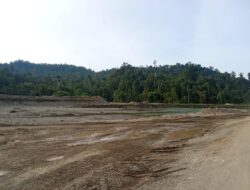
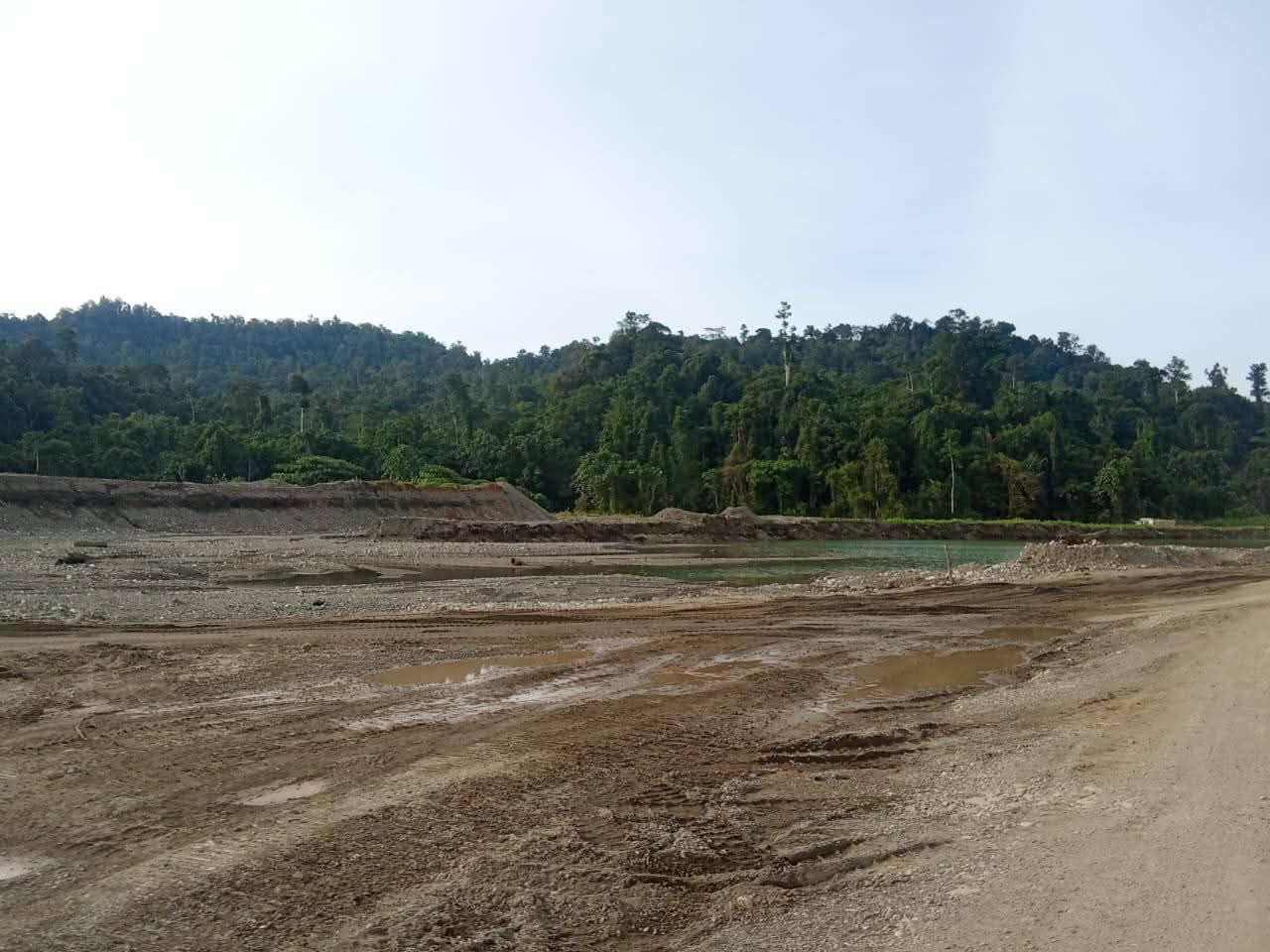
Jayapura, Jubi – The Indonesian Forum for the Environment (WALHI) Papua has called for the protection of Indigenous communities’ rights and guarantees of environmental rehabilitation at the former PT Kristalin Eka Lestari (PT KEL) gold mining site in Makimi district, Nabire regency, Central Papua province.
The call follows the revocation of PT KEL’s mining license over alleged forest encroachment. The government has since handed control of the mining concession to state-owned mining company PT Aneka Tambang Tbk (Antam).
“The government’s transfer management of the former PT Kristalin Eka Lestari gold mine to PT Aneka Tambang Tbk (Antam) must be accompanied by transparency, protection of Indigenous rights and guarantees of environmental restoration,” WALHI Papua said in a press statement on Thursday, October 29, 2026.

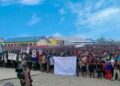

WALHI Papua said the Forest Area Enforcement Task Force’s (Satgas PKH) operation at the mining site on October 22, 2026, following the revocation of PT KEL’s mining license on October 12, 2026, presented an opportunity to review mining governance in Central Papua.
However, it said the enforcement action must go beyond taking control of the land and replacing the company managing the site.
The government must explain how environmental damage will be addressed, how Indigenous communities’ rights will be protected and who will be held responsible for the impacts of previous mining activities it said.
“The arrangement and timeline for transferring management of the 275.36-hectare gold mining area have not been explained in detail,” WALHI Papua said.
The organisation said the success of the enforcement operation should not be measured solely by the revocation of the mining licence or the transfer of control over the land.
Instead, it should be assessed through ecosystem restoration, the resolution of land disputes, law enforcement and the fulfilment of the rights of affected Indigenous Papuans living in surrounding areas.
WALHI Papua warned that simply replacing the mining operator without addressing existing environmental and social problems could leave the underlying issues unresolved.
It also stressed that management by a state-owned company should not automatically be treated as justification for all mining activities in the area.
State ownership, it said, does not exempt a company from complying with licensing requirements, environmental protection standards, Indigenous rights or legal responsibilities.
“Central Papua is not an empty space that can be managed solely in the interests of investment and state revenue,” WALHI Papua said.
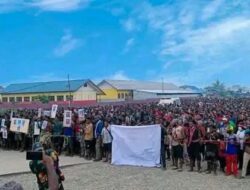
The organisation said Indigenous communities in the mining area had historical, social, economic and cultural ties to their ancestral lands and natural resources.
It therefore called on the government to disclose information about the legal status of the area, the basis for the management transfer, licensing documents, concession boundaries and consultations with Indigenous communities holding customary rights over the land.
“The fundamental question is simple: have Indigenous communities been meaningfully involved before the decision on the new management arrangements was made?” it said.
WALHI Papua said community participation must go beyond public information sessions held after decisions have already been made.
Communities must receive complete information, have opportunities to raise objections and be involved in decisions affecting their land, livelihoods and future, it said.
The organisation also highlighted the importance of participatory mapping to identify customary land boundaries, community-managed areas, sacred sites, water sources and locations potentially affected by mining activities.
Without transparency and recognition of Indigenous rights, the transfer of mining management could create further problems for local communities, it warned.
WALHI Papua said gold mining in Papua could not be separated from the risks of sedimentation, water pollution, landscape degradation and the loss of community livelihoods.
At the former PT KEL site, it said the government must ensure that an environmental audit and field inspections are conducted transparently, with the involvement of independent experts and representatives of affected communities.
The assessment should cover soil conditions, water quality, waste management, changes to the landscape, rehabilitation obligations and the restoration needs of the area.
“The findings must be made public and used as the bases for determining the responsibilities of the parties concerned,” WALHI Papua said.
It added that environmental restoration must not be treated merely as an administrative requirement. The government must ensure there is a clear action plan, measurable targets, adequate funding and long-term monitoring.
WALHI Papua said natural resource management in Papua should be guided by principles of ecological justice. The state’s recovery of control over the mining area did not automatically mean the interests of Indigenous communities had been met.
The government must demonstrate that the enforcement action genuinely addressed the underlying problems, including legal compliance, environmental damage, land ownership disputes and unequal distribution of economic benefits, it said.
If Antam is formally appointed as the operator, the company must comply with all applicable legal and environmental obligations and be subject to clear public oversight mechanisms.
“Its status as a state-owned enterprise must not be used as a reason to reduce transparency or disregard Indigenous rights,” WALHI Papua said.
The organisation said environmental protection and Indigenous rights were inseparable from Papua’s future. The value of gold, it said, should not be measured solely by its market price or the potential profits for mining companies, but also by their responsibility towards the land, water, forests and communities living in the surrounding areas.
It said the enforcement of mining regulations would only be meaningful if environmental damage was repaired, Indigenous rights respected and natural resources managed fairly and transparently.
WALHI Papua has urged the government to disclose all information regarding the transfer of mining management.
It said the government must explain the legal basis, the status and size of the concession, the management or licensing arrangements, and the decision-making process involving Antam.
The organisation also outlined several demands:
Protect Indigenous communities’ rights
The identification of customary landowners and participatory mapping must be conducted transparently. All decisions affecting customary territories must respect community rights and applicable laws.
Conduct independent environmental audits and inspections
The assessment must establish the site’s environmental condition, rehabilitation and restoration obligations, and the responsibilities of parties found to have caused damage.
Ensure transparent law enforcement
Alleged violations involving mining licenses, forest area use, rehabilitation obligations and environmental regulations must be investigated based on evidence. Law enforcement must not stop at license revocation if outstanding legal obligations remain unresolved.
Prioritize restoration before expanding mining operations
The government must explain how the area will be rehabilitated and ensure that any new activities do not worsen environmental impacts or social conflicts.
Guarantee community participation in oversight
Indigenous communities, environmental organisations, academics and independent institutions must have access to information and opportunities to monitor environmental restoration.
Review mining policy in Central Papua
Mineral policies must take into account environmental carrying capacity, the sustainability of community livelihoods and the rights of future generations, rather than focusing solely on increasing production and economic returns. (*)