Jayapura, Jubi – The Papuan Human Rights and Human Integrity Foundation (YKKMP), has urged the President of the Republic of Indonesia, Prabowo Subianto, to conduct a comprehensive evaluation of security policy in the Land of Papua.
YKKMP Director Theo Hesegem said that a thorough evaluation of security policy in the Land of Papua is important to carry out for the sake of protecting civilians and upholding international humanitarian law. This statement was conveyed by Theo Hesegem in an electronic message to Jubi on Monday (7/6/2026).
Theo Hesegem stated that his organization wishes to express its deep concern and condolences to all the families of victims over the continued recurrence of violence that has resulted in the loss of life in the armed conflict in the Land of Papua.
He said that the conflict, which has lasted for decades, has not only claimed victims among security forces and armed groups, but has also caused prolonged suffering for civilians.
“Among these victims are pioneer aviation pilots who provide humanitarian services in the interior regions of the Land of Papua,” said Theo Hesegem.
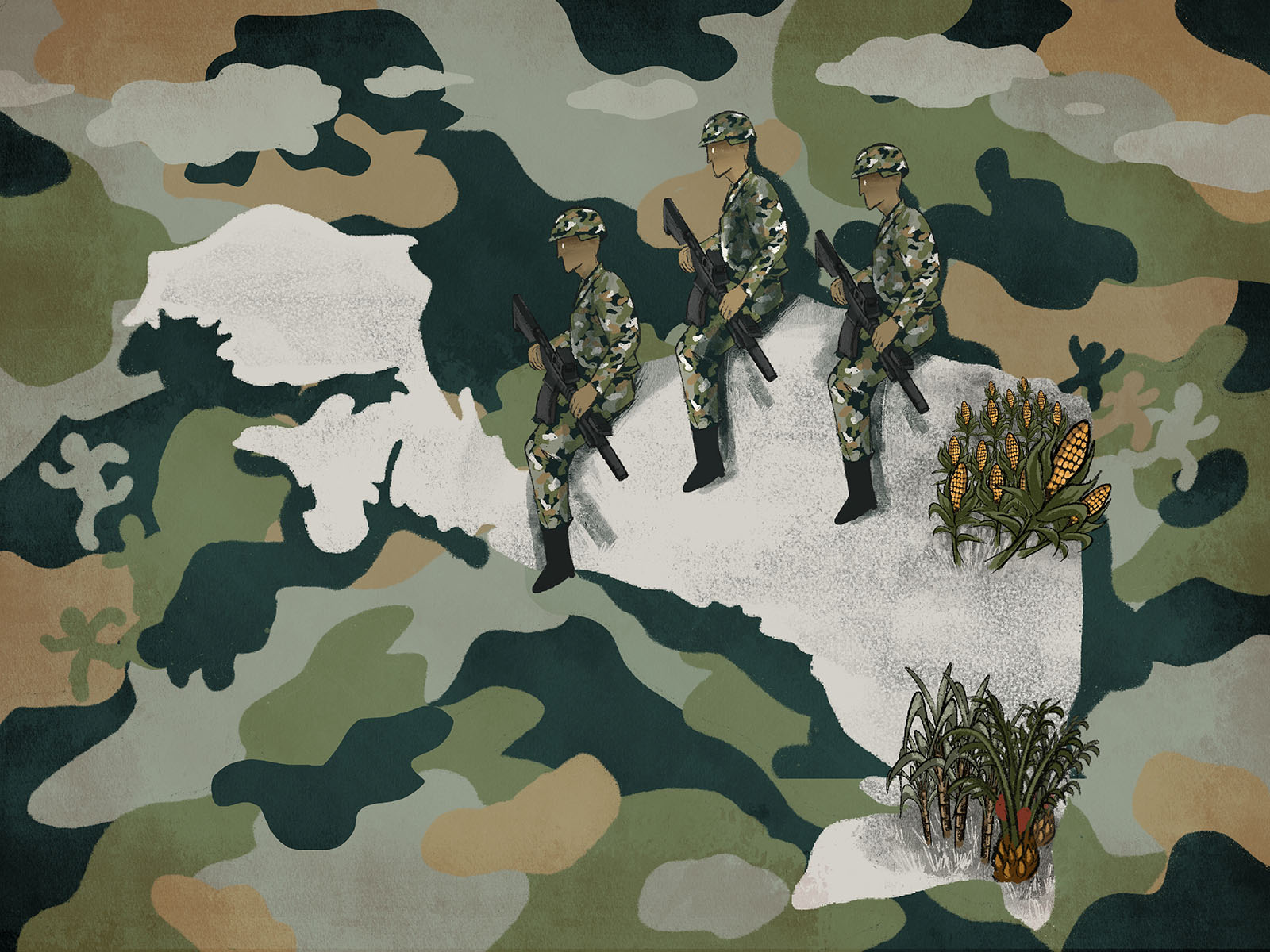
Therefore, YKKMP urges the President of the Republic of Indonesia, Prabowo Subianto, and the Vice President of the Republic of Indonesia, Gibran Rakabuming Raka, to immediately conduct an open, independent, comprehensive, and human-rights-based evaluation of the policy of deploying non-organic troops to the Land of Papua, as well as the effectiveness of the security approach in resolving the armed conflict.
According to him, the security approach has so far failed to stop the cycle of violence. On the contrary, the conflict continues to claim lives, displace communities, cause prolonged trauma, disrupt public services, and worsen humanitarian conditions in various regions of the Land of Papua.
“Civilian aviation pilots are an important part of humanitarian services in Papua. They transport health workers, teachers, patients, logistics, food supplies, medicine, and other basic necessities for communities in remote areas that can only be reached by air,” he said.
Based on information documented by YKKMP as of July 2026, at least four pilots have died in various incidents related to the armed conflict in the Land of Papua, and one pilot was once taken hostage before eventually being released.
These incidents are considered to demonstrate that the armed conflict has had a very serious impact on humanitarian services and the safety of civilians.
YKKMP also emphasized that the protection of civilians is both a constitutional obligation and an obligation under international law that must be respected by all parties.
This legal basis includes the 1945 Constitution of the Republic of Indonesia (UUD RI), particularly Article 28A, Article 28G paragraph (1), and Article 28I, which guarantee the right to life, the right to a sense of security, and the protection of human rights. It also includes Law Number 39 of 1999 on Human Rights and Law Number 26 of 2000 on Human Rights Courts. In addition, the 1949 Geneva Conventions, which Indonesia has ratified through Law Number 59 of 1958. This also includes the principles of International Humanitarian Law, particularly the principles of distinction, proportionality, precaution, and the prohibition against attacking civilians and civilian objects.
“Although Indonesia has not yet become a state party to Additional Protocol II of 1977, a number of principles for the protection of civilians in non-international armed conflicts have been widely recognized as part of customary international law,” he said.
From the perspective of international humanitarian law, Theo Hesegem continued, civilian aviation pilots carrying out humanitarian missions are, in principle, civilians as long as they do not take a direct part in hostilities. Therefore, they must not be made targets of attack.
The same protection applies to health workers, teachers, humanitarian volunteers, religious leaders, women, children, the elderly, and all civilians.
Attacks on civilian aviation pilots not only take away a person’s life, but also hinder the distribution of humanitarian aid, health services, education, and basic necessities for communities in remote areas.
YKKMP also emphasized that any alleged violation of the law committed by anyone in the armed conflict must be processed through a fair, independent, transparent, and accountable legal mechanism in accordance with national law and human rights standards.
As part of efforts to encourage the resolution of the conflict based on respect for human rights, the rule of law, and international humanitarian law, YKKMP has issued recommendations to all stakeholders.
The recommendations are as follows: YKKMP urges the President of the Republic of Indonesia to conduct a comprehensive evaluation of security policy in Papua, prioritize peaceful dialogue, and ensure that health services, education, and humanitarian assistance continue to operate.
To the military and police, YKKMP calls for all security operations to be carried out in accordance with national law, human rights principles, and relevant provisions of international humanitarian law. The protection of civilians must be the top priority, accompanied by professional, independent, and transparent law enforcement against any alleged violations.
To the West Papua National Liberation Army (TPNPB), YKKMP calls on it to respect the principles of international humanitarian law by not making civilians targets of violence. Civilian aviation pilots, health workers, teachers, religious leaders, humanitarian workers, women, children, and other vulnerable groups must be given protection.
YKKMP also calls for the safety of humanitarian services to continue to be guaranteed and for the resolution of the conflict to be pursued through peaceful dialogue. YKKMP asks the House of Representatives of the Republic of Indonesia (DPR RI) to carry out its oversight function over government policy in Papua, for Komnas HAM (the National Commission on Human Rights) to increase independent monitoring and investigation, and for Komnas Perempuan (the National Commission on Violence Against Women) to give special attention to women and children affected by the conflict.
YKKMP also hopes that the Office of the UN High Commissioner for Human Rights (OHCHR) and the International Committee of the Red Cross (ICRC) will continue to carry out their mandates in promoting respect for human rights, international humanitarian law, and the protection of civilians.
To local governments throughout the Land of Papua, YKKMP calls for public services to continue operating, for displaced communities to receive protection, and for dialogue and reconciliation to continue to be strengthened through cooperation with customary leaders, religious leaders, and civil society organizations. In addition, YKKMP emphasizes that the safety of civilians must be the top priority for all parties involved in the conflict. All parties bear a responsibility to respect the right to life, human dignity, and the principles of international humanitarian law.
YKKMP believes that the resolution of the Papua conflict can only be achieved through respect for the law, protection of human rights, dignified dialogue, and a shared commitment to end violence so that there are no more victims among civilians.
In addition, YKKMP put forward the following demands: that the President of the Republic of Indonesia immediately establish an independent national evaluation team on security policy in Papua. The government must open space for inclusive and dignified dialogue as an effort to resolve the conflict peacefully. All parties involved in the conflict must respect international humanitarian law and put an end to all forms of violence against civilians.
Komnas HAM (the National Commission on Human Rights) must also carry out independent monitoring and investigation into the various incidents of violence that have resulted in civilian casualties in Papua. The House of Representatives of the Republic of Indonesia (DPR RI) is called on to carry out its oversight function over government policy in handling the Papua conflict, in order to ensure respect for the constitution, human rights, and the rule of law.
The United Nations and the international community are asked to continue paying attention to the humanitarian situation in Papua, in accordance with the principle of respecting Indonesia’s sovereignty and the obligation to protect human rights. YKKMP emphasizes that human safety and dignity must be the top priority in every state policy and in the actions of all parties involved in the conflict. There must be no more civilians losing their lives while carrying out humanitarian services.
For a just peace can only be achieved through respect for human rights, the rule of law, dignified dialogue, and effective protection for all civilians. (*)