
Sentani, Jubi – The first day of the 15th Sentani Lake Festival has yet to provide significant economic benefits for Papuan women running small businesses at the event, according to the deputy chair of the Papua Mama Market Foundation, Nurama Yarinap.
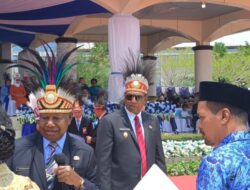
Yarinap criticised the opening of the festival on Tuesday (25/08/2026), saying government officials should do more than simply walk around the stalls displaying products made by Papuan women. She said officials should engage directly with the vendors and buy their products.
“After the opening, I saw officials just walking around looking at the stalls. What is the point of having small businesses here if that is all they do? The women have put all their work on display, from noken bags to food and other products,” Yarinap told Jubi at the festival site at Kalkote Beach in Harapan village, East Sentani district, Jayapura regency, Papua, on Tuesday.



She said officials visiting the stalls should stop to speak with vendors and ask about the products, including how they were made.
Such interaction, she said, would show appreciation for the women who had brought their products to the festival.
Yarinap pointed to West Java Governor Dedi Mulyadi as an example, saying he had bought products from every stall when he attended a Mama Papua exhibition.
“He went around and bought things from every stall. He bought a lot. Papua’s officials should do the same,” she said.
Yarinap said the participation of small businesses at the festival should be part of the government’s efforts to increase local incomes.
Officials and visitors, she said, should therefore support the vendors by purchasing their products rather than simply visiting the stalls to look around or take photographs.
“This is not an event just for taking photos. We need to show support for the women who come here every day to earn a living. We need to work together so Papua’s economy can grow and become self-reliant,” she said.
Yarinap also questioned why Papuan women were required to pay for their exhibition stalls when there was no guarantee their products would sell.
“We all have to pay for these stalls. Every woman has to pay. What happens if there is no income or no improvement? We come here and we should be buying things. Papua’s officials need to see these women and their products,” she said.
She hoped future festivals and similar events would waive stall fees for Papuan women.
“In future events, Papuan women should be prioritised, especially when we are talking about improving the economy. If we are talking about the economy of Papuan people, they really need to be prioritised. There should be no stall fees. The stalls should be free,” she said.
Yarinap said the Papua Mama Market Foundation had been supporting small businesses and Papuan women from different parts of the region and hoped the festival would provide genuine market access for their products.
She also hoped the event would increase local incomes rather than ending with the opening ceremony.
“This is an important moment, and we hope it will lead to real economic benefits for Papua,” Yarinap said.
Similar concerns were raised by Paulina Wouw, a small-business participant from the Griminawa area of Nimboran district.
Wouw said the presence of Papua Governor Matius Derek Fakhiri at the festival’s opening had yet to translate into direct economic benefits for the women selling their products.
She said the governor and his delegation should have visited individual small-business stalls, spoken with the women and bought their products.
“It would have been better if the governor had come into each of the small-business stalls. The women have been working hard making noken bags so we can be proud of what we produce,” she said.
Wouw said even buying one or two products would make the women feel appreciated while helping increase their income.
“If he came in and bought two or three items, the women would be happy. They could go home feeling proud that they are working as Papuan women,” she said.
She said visitor numbers at the small-business stalls remained low on the festival’s first day, with most people simply looking around without making purchases.
“On the first day, there were not many people coming in. Mostly it was families who came in, looked around and left,” she said.
As a result, Wouw said the women had not earned any income from sales on the first day.
“There has been no income yet,” she said.
Wouw and other vendors were selling noken bags, hairpins, headbands and other handicrafts made from thread, tree bark and other natural materials.
She said some of the noken bags were made from natural materials including young sago leaves, boat-bark fibre and crown-of-thorns materials, and came in different sizes and colours.
Wouw hoped officials and visitors attending the festival in the coming days would support the vendors by purchasing their products.
“Maybe they could buy one, two or three items so we can go home feeling satisfied,” she said.
She said women travelling from remote areas had to cover transport and food costs while attending the festival, making sales particularly important.
“We come from Ginyem in Nimboran district. We must pay for taxis and food. If we can go home after selling our products and making a decent amount, our children and husbands will be happy too,” she said.
Wouw urged the government and officials to make Papuan women a priority in initiatives aimed at strengthening the local economy.
The Sentani Lake Festival, she said, should be more than a celebration of culture and also serve as a marketplace that delivers tangible economic benefits to Papua’s small-business operators. (*)