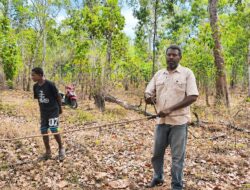
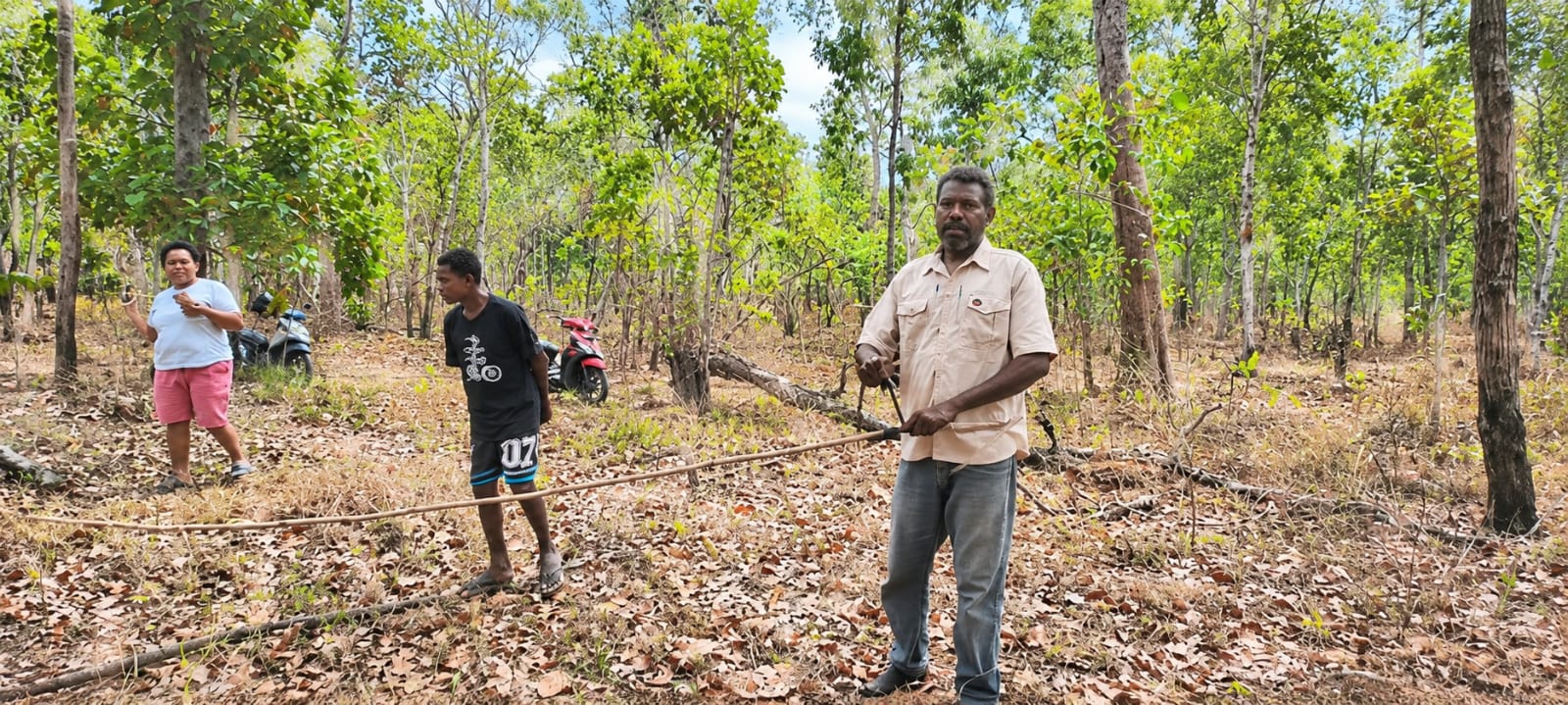
Merauke, Jubi – Carrying a bamboo pole fitted with a simple hook, Hilarius Gebze walks through the forest around Biras, a recreation area in Wasur Village, Merauke, South Papua, searching for ant plants that provide the raw material for his family’s small business.
From time to time, Hilarius stops and looks up into the treetops, scanning for the bulbous plants hanging from branches. For many people, ant plants are simply part of the forest ecosystem. For Hilarius and his family, they are a source of income.


Since 2010, Hilarius and his wife, Ayu Handayani, have harvested and processed ant plants into herbal tea products through the Ndungger Group in Wasur Village. In the local language, Ndungger means ant plant.
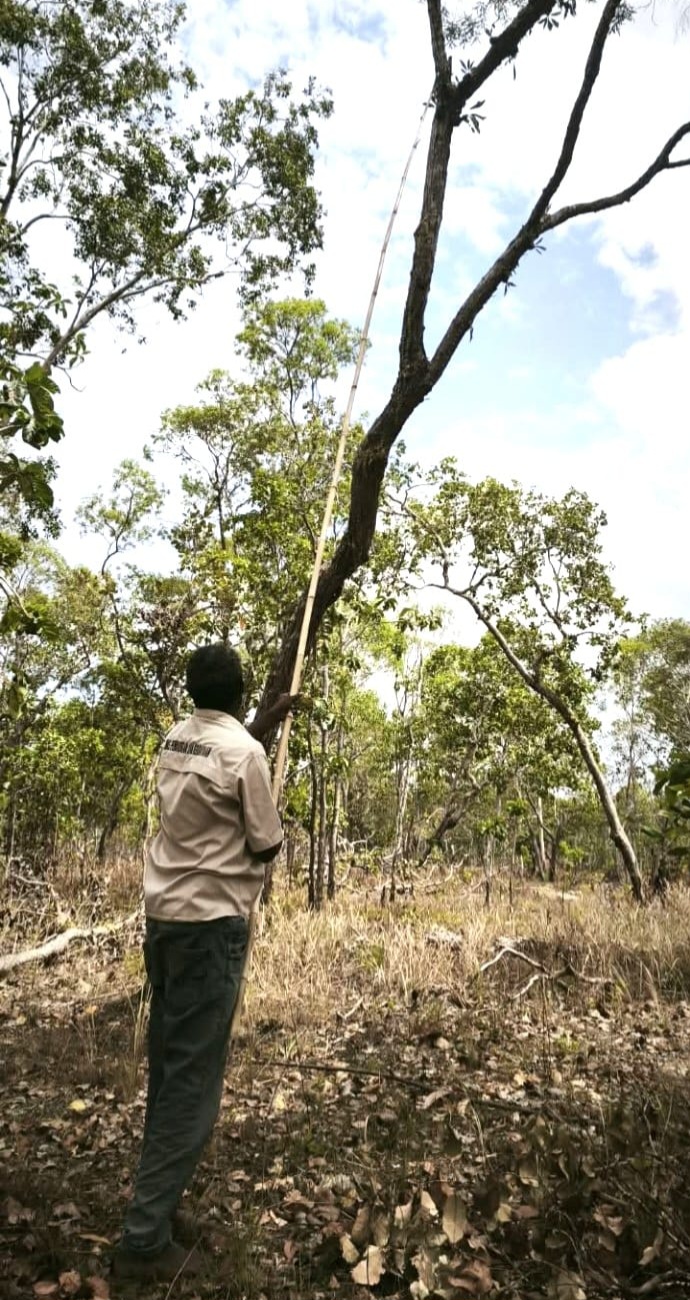
Hilarius does not use an axe when harvesting. Instead, he relies on a bamboo pole and a branch from the rahae tree, tied together with binen fibre to form a hook-like tool. Mature ant plants are carefully pulled down from the canopy.
A single tree can host two, three, five, seven or even around ten ant plants. But Hilarius does not collect them all. He usually selects only three or four larger plants, leaving smaller ones to continue growing.
The harvesting method reflects a traditional practice aimed at ensuring the plants remain available in the forest, which lies near the protected landscapes of the Wasur area in South Papua.
The method is important because the family’s business depends on the availability of ant plants in the forest.
When an ant plant falls, Hilarius and Ayu do not immediately approach it. The plants are covered in spines that can cause injuries, while ants inside and around the plants can also attack. During a search with Hilarius, the writer was bitten by ants.
Hilarius usually holds the stem or the end of the leaf where the plant is attached. Ayu then collects the fallen plants and places them in sacks.
For the family, the forest produce helps cover household expenses, including their children’s education.
“Apart from household needs, it also helps with other expenses, especially the cost of sending the children to school,” Hila said.
Transporting Raw Materials Is a Challenge
The work becomes more difficult as the seasons change. During the dry season, a three-wheeled vehicle can still travel close to the harvesting sites. When it rains, the roads become muddy and some sections are flooded. Vehicles have to be left closer to the main road, with the ant plants then carried out on foot.
A single collection can fill a sack with around 30 to 50 kilograms of raw material. Hilarius usually collects several sacks as a supply. The weight decreases after the plants are cleaned, peeled, cut or grated, and dried.
At home, Ayu continues the processing. She removes the outer layer and spines before grating the plants into more uniform pieces. When weather conditions are favourable, the drying process takes about one to two days.
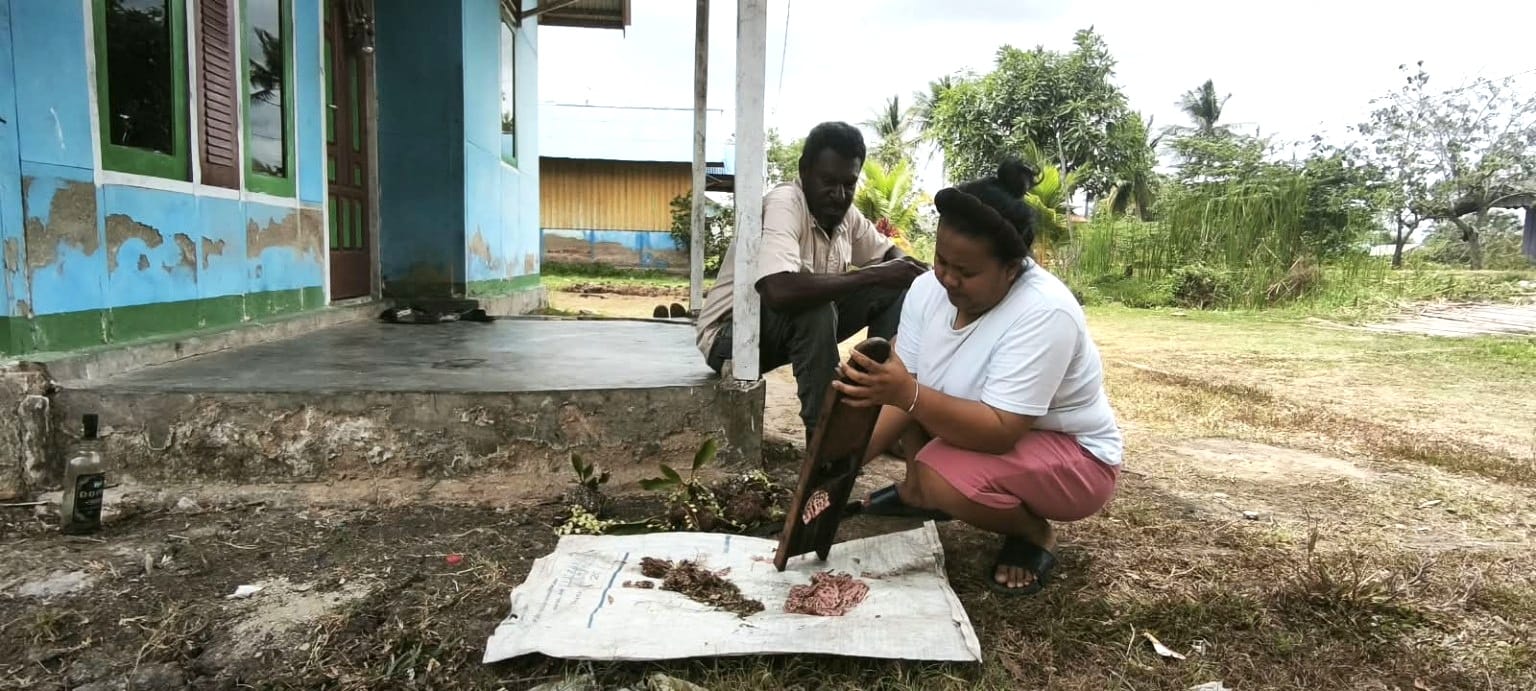
The dried material is then packaged as Ant Plant Tea, with a net weight of 40 grams, or 20 tea bags per pack.
The product is sold from Wasur Village to customers in Merauke and to buyers in other parts of Indonesia. Promotion is mainly carried out through social media, particularly Facebook, as well as through customer networks and the group’s supporters.
For Ayu, the business has a direct impact on her family’s finances.
“For me, the business has an impact on our family’s finances. It helps pay for one child’s school expenses and daily petrol costs because the child goes to school in the city,” Ayu said.
Ndungger Group Shrinks
The business once involved around 30 people through the Ndungger Group. Today, only a few members remain active, mainly when large orders come in.
Yosefina Ndiken joined the group in 2022. When orders arrive, members are called in to work together. When there are no orders, they return to their individual activities at home.
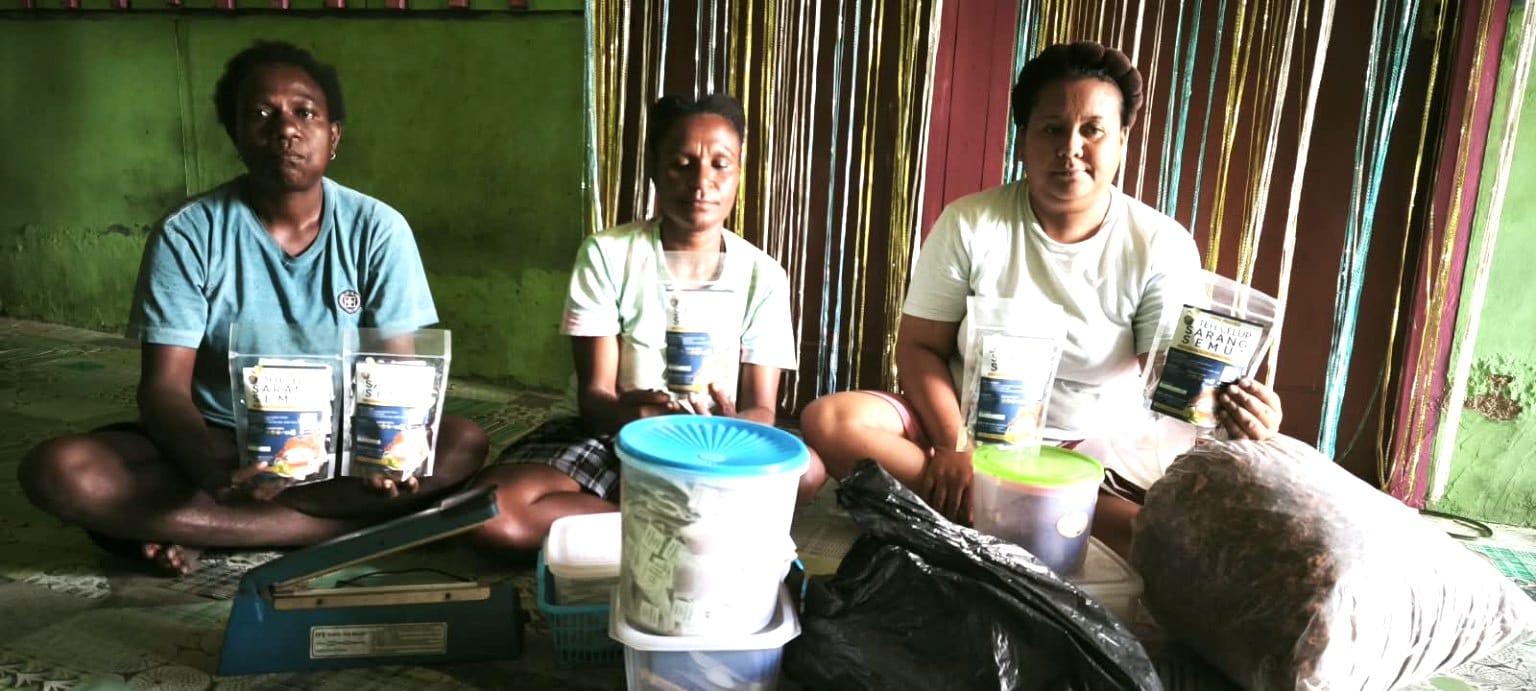
Transport is one of the group’s main challenges. Members who do not have their own vehicles have to rely on others or hire transport to collect raw materials from the forest.
“There are only a few of us who have stayed on until now, but the main problem is transport. That is the challenge for our group,” Yosefina said.
Absalonia Helena Basik-Basik, who has been a member since 2010, faces a similar problem. During the wet season, two-wheeled vehicles have to be left on the main road. The raw materials collected from inside the forest are then carried out by hand.
“During the wet season, we leave the motorbikes outside, on the main road. Then we collect the materials from inside the forest and carry them back out,” Absalonia said.
Beyond transport, the group needs production equipment, capital to buy tea bags and other supplies, as well as better access to markets. The blender and tea-bag sealing machine they use are also old and no longer in good condition.
The group has previously submitted funding proposals. However, members said proposals submitted through parties outside the relevant government agency had not received the response they had hoped for.
Protecting the Forest to Keep the Business Going
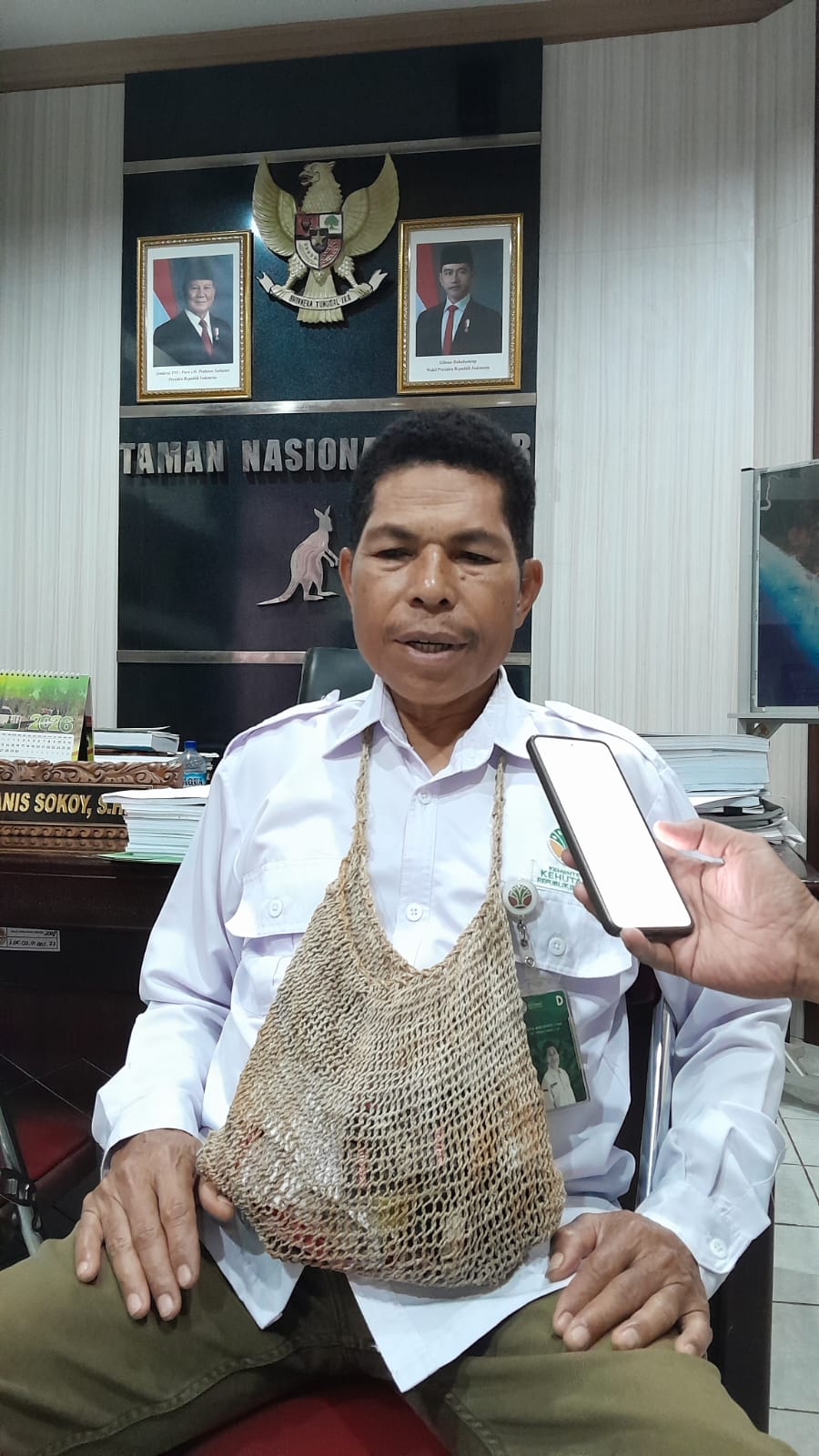
The head of the Wasur National Park Office, Acha Anis Sokoy, said harvesting ant plants was one form of using non-timber forest products that could be carried out while taking the sustainability of the area into account.
According to Acha, conservation area management covers protection, preservation and sustainable use. Communities can harvest ant plants as long as the resource is protected and allowed to regenerate.
Acha said people who have traditionally harvested ant plants already know which ones are ready to be harvested and which are still too small and should be left to grow.
“Sustainable use means harvesting plants that have reached maturity. That means some must be left behind to ensure they continue to grow,” Acha said.
The presence of ant plants is also linked to the vegetation, the trees on which they grow and the condition of the soil. The trees that host the plants therefore need to be protected. In Wasur National Park, communities are also prohibited from cutting down these trees.
The Wasur National Park Office has provided assistance to community groups in Wasur, Yanggandur, Sota and Rawa Biru. The support includes production equipment, funding for certain needs, entrepreneurship training, improving processing skills and strengthening group management.
However, when the products are ready to enter wider markets, business and product licensing becomes an issue.
Acha said the government needs to work with local communities to find solutions for licensing and marketing.
“The community already has traditional knowledge about how to use these resources sustainably. What we need to do is guide and support them,” he said.
Licensing a Requirement for Wider Markets
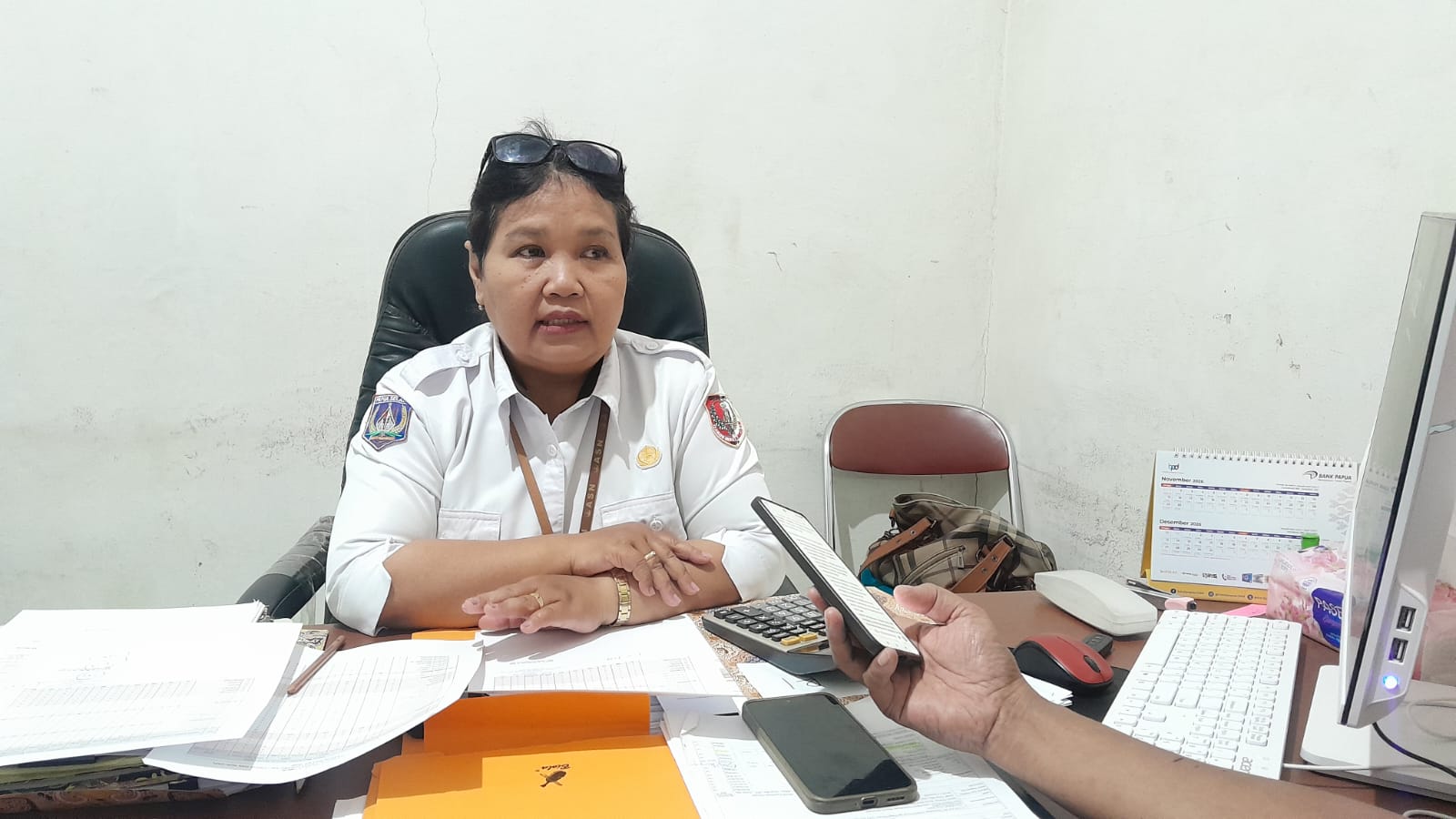
Pompea Habsari, head of the Small and Medium Enterprises Division at the Merauke Industry, Trade and Cooperatives Agency, said the local government has a capital assistance program for Indigenous Papuan business operators, funded through special autonomy funds.
The program has provided assistance since 2023. The amount varies depending on the type and scale of the business. The smallest amount she mentioned was around 13 million rupiah (about A$1,100) per group.
Business operators must have been running their businesses for at least six months. Applications must also meet administrative requirements, including a Business Identification Number (NIB) and requirements for community groups.
The agency conducts administrative and field assessments before determining the amount of assistance. This means the amount requested in an application is not automatically granted in full.
For products such as Ant Plant Tea, Pompea said business and product licences are important if producers want to access wider markets.
The local government also provides assistance with trademark applications and encourages small and medium-sized enterprises to sell their products at souvenir shops and airport outlets, provided they meet the required standards.
“The main point is that the product must be able to be marketed. What matters is that it meets the requirements. If it does not, the market will not buy it,” Pompea said.
The Ndungger Group now faces several challenges at once: its raw materials are deep in the forest, access to harvesting sites depends on weather and transport, its production equipment is ageing, membership has declined, and its products need the necessary licences to reach wider markets.
At the same time, Wasur Forest cannot simply be treated as a warehouse of raw materials to be continually harvested.
That morning, after collecting several ant plants, Hilarius carried the harvest out of the forest. The plants would then pass through Ayu’s hands before being turned into packaged tea.
From Wasur Forest, the economic chain begins: the plants grow on trees, are harvested selectively, carried home, processed, packaged and sold to help support families.
Its sustainability depends on two things happening together — communities must be able to benefit economically from the forest while the forest continues to provide the resources they depend on.
For Hilarius, as long as the trees where the ant plants grow remain standing and smaller plants are given time to develop, the forest is more than a place to collect resources.
For Indigenous Papuans, the forest is a place on which their livelihoods depend. (*)