Jayapura, Jubi – The Jayapura Administrative Court (PTUN Jayapura) has rejected a legal challenge brought by Malind Indigenous representatives against a decision by the Merauke regent approving the environmental feasibility of a 135-kilometre road project in South Papua.
Five Malind Indigenous representatives challenged Merauke Regent Decree No. 100.3.3.2/1105/2025, which concerns the environmental feasibility of the 135km access road. The road forms part of a food security project being carried out by Indonesia’s Ministry of Defence under the National Strategic Projects (PSN) program.
The case, registered as No. 9/G/LH/2026/PTUN Jayapura, was filed on 5 March 2026.
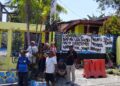


The five plaintiffs are Simon Petrus Balagaize, Sinta Gebze, Liborius Kodai Moiwend, Kanisius Dagil and Andreas Mahuse.
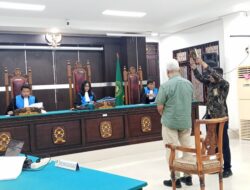
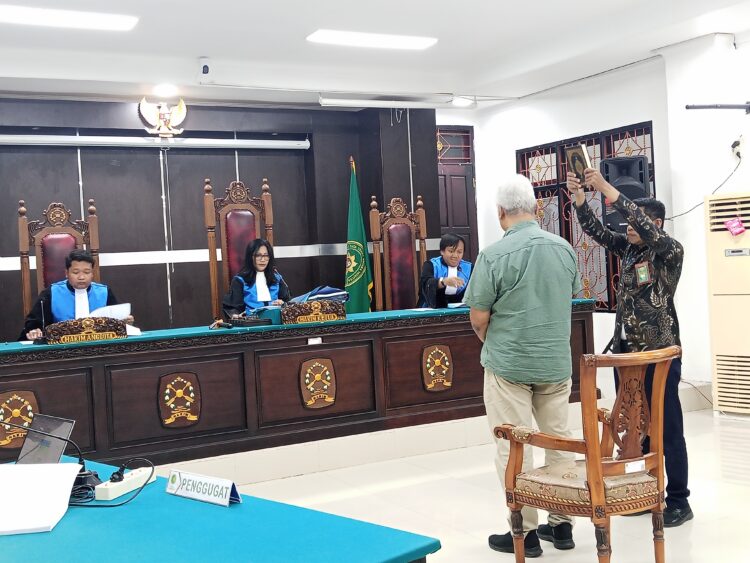
After six months of proceedings, the Jayapura Administrative Court in Jayapura City rejected the lawsuit. The ruling was published through the e-court system on 18 September 2026.
Tigor Hutapea, a lawyer with the Merauke Solidarity Advocacy Team from Pusaka Bentala Rakyat, which represented the plaintiffs, criticised the ruling, describing it as “very poor and unjust”.
He said the judges had failed to consider any of the evidence, or the testimony of witnesses and experts, concerning alleged violations of Indigenous rights arising from the 135km road project.
“The plaintiffs chose the difficult path of seeking justice through the courts, but what they received was injustice,” Hutapea said in a written statement on Monday night (21/9/2026).
The five plaintiffs challenged the Merauke regent’s decision approving the environmental feasibility of the road between Wanam and Muting.
Hutapea said the decree was issued a year after construction had already begun, including the clearing of forests and Indigenous customary lands belonging to the Malind people, and without the free, prior and informed consent (FPIC) of customary landowners.
He said the road was not intended to connect villages but to support the National Strategic Project in Merauke, which has faced criticism over alleged environmental and Indigenous rights violations.
Hutapea said the court found that the process for issuing the environmental feasibility decree had complied with legal requirements, including the environmental impact assessment (AMDAL) process and public consultations.
However, he said five fact witnesses and one expert presented by the plaintiffs had provided evidence to the contrary.
Four Malind Indigenous witnesses said they had directly witnessed road construction and the clearing of customary forests before the defendant had conducted any public consultation.
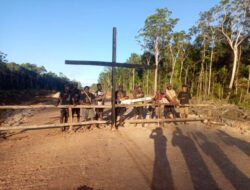
“One witness from Nakias Village testified that around three kilometres of his clan’s forest had already been cleared on 2 September 2025, even though the customary landowners had rejected the project and blocked the area by erecting a red cross,” Hutapea said.
Another witness from Wanam Village gave similar testimony. According to the witness, excavators entered the village and began clearing the forest in August 2024.
The plaintiffs also called environmental law expert I Gusti Agung Made Wardana from Gadjah Mada University. He highlighted the importance of participation and FPIC in preparing environmental impact assessments for development projects, particularly where communities are directly affected.
Hutapea said that, in this case, objections from clans opposing the project had not been adequately considered, allowing the project to proceed. He said FPIC-based public consultation should recognise the collective rights of Indigenous communities, follow their internal decision-making mechanisms where representatives are involved, and involve genuine two-way dialogue.
Asep Komarudin, a lawyer with Greenpeace’s Merauke Solidarity Advocacy Team, said the court’s reasoning failed to address substantive issues raised by the witnesses.
He said testimony about the road construction, its impacts on Indigenous communities and the environment, and other concerns had not been adequately addressed in the ruling.
“The ruling appears to simply repeat the administrative evidence and consider it sufficient, without directly examining what happened on the ground,” Komarudin said.
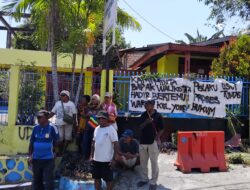
One of the plaintiffs, Simon Balagaize, said he was deeply disappointed by the decision.
“The law no longer guarantees us anything in this country, whether through legal challenges or the facts on the ground. We will continue fighting and defending these lands. The truth will side with us Papuans. This lawsuit is not the only way; there are a thousand other ways,” Balagaize said.
During the six-month court proceedings, the defendant continued construction of the road, despite presiding judge Merna Cinthia ordering the project to be suspended on 9 June 2026.
Greenpeace satellite monitoring showed that construction continued, with the road now extending 135km from Wanam to Muting.
The road project has also reportedly affected local communities, including by reducing food sources and affecting livelihoods as the number of game animals available for hunting and sale has declined.
Residents have also reported environmental impacts, including hotter weather, dusty air and declining water quality.
Communities have additionally reported intimidation by security personnel deployed around the road project, which forms part of a National Strategic Project covering 2.7 million hectares. (*)