Jayapura, Jubi – Environmental advocates and Indigenous communities in Papua say the expansion of oil palm plantation threatens wildlife habitats, cultural traditions and the ecological knowledge passed down through generations.
WALHI Papua executive director Maikel Primus Peuki said he had witnessed birds struggling to find shelter after natural vegetation was cleared during a visit to Merauke, in South Papua province.
“I once saw a bird flying far and high. It became so exhausted that it fell and died. At first, I thought someone had shot it, but there were simply no trees left for it to shelter in,” Peuki said during a Jubi podcast at the newsroom last week.

“Birds cannot nest in oil palms because those are not their homes.”Peuki said the incident illustrated the differences between natural forests and oil palm plantation, despite both plants having leaves and producing oxygen.
Oil palm belongs to the genus Elaeis, while Indonesia’s tropical forest supports a wide range of plant and animal species. Replacing diverse forests with monoculture plantations can reduce the variety of habitats available to wildlife.
“Imagine birds flying long distances, becoming exhausted and falling dead. It is a distressing reality because those birds know where their homes are,” he said.
Peuki also highlighted the role of Indigenous knowledge in maintaining ecological balance, including seasonal calendars that guide communities on when to hunt wild pigs.
Dr Ignasius Ngari, OFM, a lecturer in artificial intelligence and environmental studies at the Fajar Timur school in Philosophy in Papua, said animals instinctively relied on habitats and could struggle when those environments disappeared.
“When their habitats are replaced by monoculture crops such as oil palm, they must find new homes, which requires time and adaptation. Otherwise, they may disappear and die,” Ngari said.
He said birds also played an important role in Indigenous knowledge systems, with their calls and behavior used to interpret environmental changes and anticipate potential dangers.
Communities in the Cendrawasih Bay region, including Yapen and Biak islands, have traditionally interpreted certain bird calls as warnings of impending natural disasters, he said.
“Although technology is now available, people still trust signs from nature, including bird calls,” Ngari said.
In Yanggu Baru village, Nimboran district, Jayapura regency, residents also associate bird calls with events in their daily lives.
Marthen Waisimon, a former village head, said a bird known locally in the Nimboran language as Yasu was believed to signal the arrival of visitors when it sang in the morning.
“Elders have long taught us that when the bird sings in the morning, visitors will arrive later that day,” Waisimon said.
He recalled his father predicting a visit after hearing the bird call, before a Jubi reporting team arriced that afternoon.
Waisimon said generations of traditional knowledge had taught residents to interpret bird calls as signs of events ranging from visitors arriving to natural disaster and impending deaths.
“We always protect our forests and trees because these birds are important to us and are our companions. We must protect the forests and trees because they are the birds’ homes, where they build their nests,” he said.
Ngari said this relationship between people, animals and plants were also reflected in the concept of totemism, in which particular species or natural elements represent the identity, ancestry and spiritual connections of a clan or community.
Peuki said several Marind clans in South Papua maintained spiritual relationsips with particular plants and animals, known as totems, which were connected to ancestral spirits called Dema.
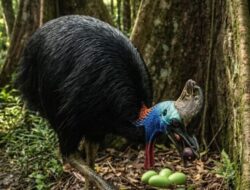
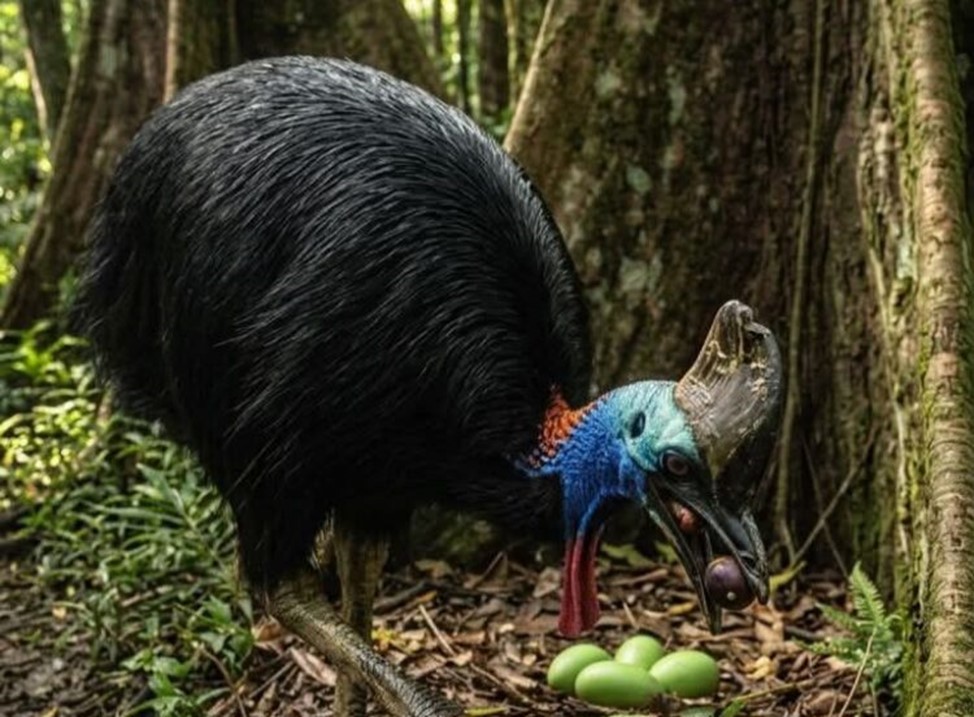
The stork, known in Marinfd language as ndik, is a principal totem of the Ndiken clan. The cassowary is associated with the Kaize clan, while the Mahuze clan’s totem includes the sago palm and dog.
The Balaigaize clan’s totem includes coconut, banana and snake, while the Basik-Basik clan’s totem in the wild pig.
Peuki warned that the disappearance of these species could affect not only biodiversity but also the cultural and spiritual practices of Indigenous communities.
As natural forests are replaced by oil palm plantations, the loss of native vegetation can also mean fewer nesting sites and less suitable habitat for birds and other wildlife.
Similar cultural connections with birds exist across the sea in Australia’s Torres Strait Island, where Indigenous communities maintain traditions that link wildlife with ancestral stories, identity and seasonal knowledge.
One example is the Torresian imperial pigeon (Ducula spilorrhoa), locally known as Rook-a-yu. The large, predominantly white bird has black feathers on its wings and tail and migrates between Papua New Guinea and Northen Australia from August to January to breed.
The species features in regional art, oral histories and personal identities, reflecting its cultural significance to Torres Strait communities.
According to the Torres Strait Ocean of Stories website, Indigenous Melanesian communities in the island interpret bird behavior, migration patterns and calls as indicators of seasonal changes, monsoon conditions, wind patterns and marine life cycles.
The movements of imperial pigeons and migratory shorebirds, including eastern curlews, great knots and curlew sandpipers, also help the communities to identity seasonal changes and determine when to harvest resources on particular islands and in surrounding waters.
The Torres Strait Island support more than 50 species of coastal seabirds. Traditional ecological knowledge remains important to monitoring environmental changes, managing invasive predators and protecting local biodiversity.
For Indigenous communities in Papua and Torres Strait, environmental protection is therefore closely connected to cultural identity, traditional knowledge and the preservation of relationships between people and the natural world. (*)