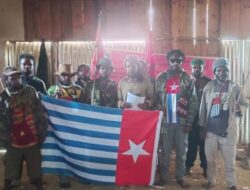
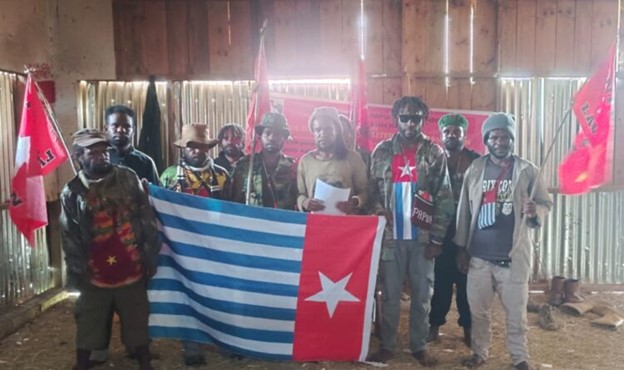
Sentani, Jubi – The West Papua National Committee (KNPB) in West Baliem Lanny Jaya regency, Highland Papua province, says United Nations Secretary-General Antonio Guterres’s visit to Indonesia should be an opportunity to raise the issue of West Papua’s decolonization.
Guterres arrived in Indonesia on Saturday night, 17 October 2026, for an official working visit.
Awani Wanimbo, head of the KNPB’s Pitano sector in West Baliem, said Guterres’s visit from 17 to 19 October should not be reviewed merely as a bilateral engagement between the United Nations and the Indonesian Government.


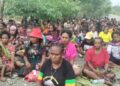
He said the visit should be used to revisit fundamental questions that have yet to receive a political acceptable to all parties concerned.
Wanimbo argued that the West Papua issue should not be reduced solely to human rights violations requiring an immediate response.
“Efforts to protect and uphold human rights do not, in themselves, resolve the question of West Papua’s political status or its right to self-determination,” Wanimbo said in a written statement on Monday (19/10/2026).
KNPB West Baliem said efforts to address the root causes of the Papua conflict through development assistance, security dialogue or improved bilateral relations, without addressing the underlying political issues, risk allowing the conflict to recur and escalate.
The group called for the West Papua issue to be addressed more comprehensively, considering the principles of decolonization and self-determination, the protection of Indigenous peoples and international human rights obligations.
It also urged the UN secretary-general not to rely on explanations from the Indonesian Government under President Prabowo Subianto, but to seek a direct understanding of the current situation in West Papua.
KNPB West Baliem said Indigenous communities, survivors of violence, internally displaced people, victims’ families, human rights defenders, church leaders and representatives of Papuan civil society should be given meaningful opportunities to share their experiences, aspirations and perspectives.
“We also urge the UN Human Rights Council and the UN secretary-general to establish credible channels of communication with diverse representatives of the people of West Papua, provide opportunities for victims to share their testimonies, and support humanitarian access and independent monitoring of human rights violations in Papua.” Wanimbo said.
He stressed that Papuans were not merely subjects of development policies or diplomatic discussions, but people with dignity, rights, history, identity, and political aspirations that deserved to be heard.
KNPB West Baliem said the principle of self-determination was fundamental to international law, as reflected in the UN Charter, Article 1 of the International Covenant on Civil and Political Rights, and UN General Assembly Resolution 1514 (XV) on the granting of independence to colonial countries and peoples.
The group called on the United Nations to pay greater attention to the historical and international legal dimensions of the West Papua issue, including the right of the West Papua people to self-determination.
It also called for open international research and dialogue based on historical evidence, legal documents and relevant UN principles.
“Development and human rights protection must not be used to close off discussion of the political aspirations of the Papuan people,” Wanimbo said.
KNPB West Baliem encouraged Papuans, civil society organizations, churches, students, young people, women, academics and international solidarity networks to use the opportunity to organize peaceful actions, submit written statements, document verifiable evidence and communicate with international institutions.
Wanimbo said political advocacy should continue through community organizing, strengthening public knowledge, documenting facts and maintain consistent diplomatic engagement.
“Every step must prioritize the safety of civilians and avoid actions that could put residents in danger,” he said.
The group stressed that international attention should go beyond acknowledging that problems existed in West Papua. It said such attention must help create a path towards addressing the root causes of the conflict and respecting the rights of the Papuan people.
“The United Nations must listen to the voices of the people of West Papua, and human rights must be protected. The root causes of the conflict must be discussed in international forums, and the right to self-determination must be given meaningful space in a peaceful and democratic political process,” Wanimbo said.
KNPB West Baliem called on the UN secretary-general to give particular attention to reported human rights violations and the humanitarian access for communities affected by conflict, including internally displaced people, support independent human rights monitoring and access for relevant UN human rights mechanisms, and create opportunities for dialogue with representatives of West Papua civil society and Indigenous communities. It also called for serious discussion of the historical and political roots of the conflict, including the principle of self-determination, and urged international institutions to ensure that the aspirations and interests of the Papuan people were not overlooked in discussions concerning their future.
“The people of West Papua are not spectators in international diplomacy,” the group said.
KNPB West Baliem also strongly rejected what it described as the definition of Indigenous Papuans being advanced by Indonesia’s Ministry of Home Affairs for political purposes relating to the Papuan people’s right to self-determination. It argued that voting in any self-determination process should belong to Indigenous Papuans, rather than non-Papuans.
The group further demanded that President Prabowo Subianto take responsibility for the reported deaths and alleged disappearance of the bodies of two people in Yahukimo – a year 12 student at Dekai State Vocational High School 1 and a civilian – which it attributed to Indonesian military marine and police personnel.
It called for the immediate return of the bodies to their families so they could be buried with dignity and in accordance with humane practices. (*)