
Merauke, Jubi – The South Papua provincial government has been urged to involve Indigenous communities in the use of Rp26.8 billion in funding from the Green Climate Fund (GCF) through the REDD+ Result-Based Payment (RBP) scheme.
The funding is intended to ensure meaningful participation by Indigenous communities, particularly in protecting their rights and promoting sustainable forest management.
South Papua Regional Secretary Ferdinandus Kainakaimu said the success of the RBP REDD+ program would not be measured solely by whether its targets were achieved, but also by the extent to which Indigenous communities were meaningfully involved in its implementation.
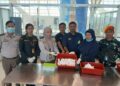

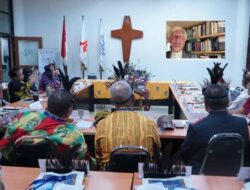
“The success of this program will largely depend on the extent to which Indigenous communities can participate meaningfully, particularly in protecting their rights,” Ferdinandus said at the RBP REDD+ program kick-off event in Merauke, South Papua, on Thursday (20/08/2026).
Kainakaimu said the South Papua provincial government and WWF Indonesia had worked together from the planning stage through to the program’s implementation.
He said the collaboration provided an important foundation for strengthening environmental and forestry programs in the years ahead.
He also expressed his appreciation to WWF Indonesia, the Ministry of Environment and the regional government agencies involved in the process.
Ferdinandus said preparations for the program had been underway for more than a year, led by the South Papua Environmental, Forestry and Land Agency in collaboration with WWF Indonesia.
“We should appreciate the South Papua Environmental Agency, the Ministry of Environment, the Environmental Fund Management Agency, the Ministry of Finance, WWF Indonesia and all parties who have supported this process as it enters the implementation stage,” he said.
Ferdinandus called on all stakeholders to strengthen their cooperation and commitment to the program so that South Papua could become a sustainable and climate-resilient region while delivering tangible benefits to local communities.
Joko Tri Haryanto, president director of the Environmental Fund Management Agency (BPDLH) under the Ministry of Finance, said the Rp26.8 billion allocation was part of Green Climate Fund financing awarded to Indonesia based on emissions-reduction performance between 2014 and 2016.
Indonesia received US$103.8 million in GCF funding after reducing emissions by 20.25 million tonnes of CO2 during that period, including payments for non-carbon benefits.
Joko said the Rp26.8 billion allocated to South Papua would fund several activities, including supporting the FOLU Net Sink 2030 policy, rehabilitating 100 hectares of land, preventing forest fires through community-based initiatives, strengthening livelihoods through access to social forestry, upgrading production facilities and protecting community rights through participatory mapping.
He said the funding should be viewed as seed funding to establish a foundation for environmental and forest management while creating opportunities for sustainable investment in South Papua.
“Without community-based mapping of territories, we cannot attract investment,” he said.
Joko said the RBP REDD+ funding in South Papua would be channelled indirectly, with WWF Indonesia serving as the intermediary organisation.
He stressed that the program must comply with safeguard principles, including grievance mechanisms, gender mainstreaming, transparency, monitoring, governance, risk mitigation and compliance with environmental and social standards.
Meanwhile, WWF Indonesia Director of Forests and Wildlife Muhammad Ali Imron said the Rp26.8 billion project would run for three years, or approximately 36 months.
The program is aimed at strengthening policies and institutions, supporting climate change mitigation and adaptation efforts, accelerating ecosystem rehabilitation and restoration, and strengthening forest protection and the rights of Indigenous communities.
“The success of this program will not be measured simply by whether the activities are completed, but by the tangible changes they produce,” Ali said.
He said those changes were expected to include better protection of ecosystems, stronger government and community capacity, greater protection of Indigenous rights and expanded opportunities for sustainable livelihoods. (*)