Teminabuan, Jubi – Southwest Papua Governor Elisa Kambu says a proposed investment to use the Sembra River as a source of bottled drinking water is intended to benefit local communities, despite opposition from Indigenous Srer people concerned about environmental damage and the protection of customary land rights.
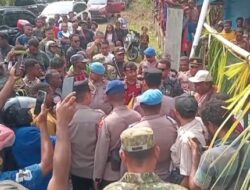
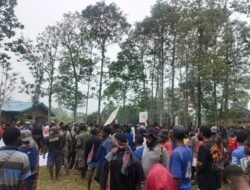
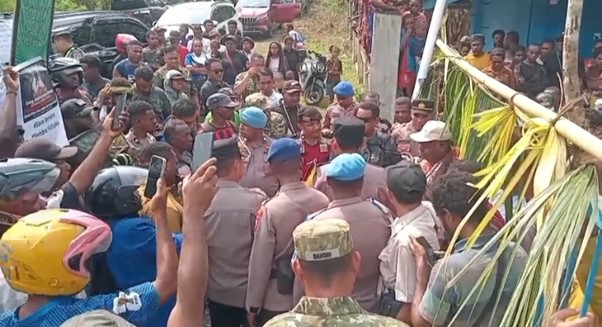
Kambu made the remarks on Monday, October 26, 2026, while meeting members of te Srer Indigenous community who oppose the plan to use the Sembra River in Srer village, Seremuk district, South Sorong regency, Southwest Papua.
The meeting followed discussions involving the local government, an investor identified as Andi, and some community members who support the proposed investment.



Addressing those opposed to the project, Kambu said he stood by his decision to bring the investor to the area, arguing that the investment was intended to help the local community.
“I am responsible for what I say. I brought an investor who will help the community here, so let us deliberate, because most people have also accepted it,” Kambu said.
He said the key consideration was ensuring the investment was beneficial and did not damage the environment. He called for dialogue, saying the proposed project should deliver benefits to the community while protecting the surrounding environment.
However, members of the Srer community opposing the investment said customary deliberations had not taken place. They said a traditional gelar tikar adat meeting was needed to discuss the rights of each clan before any decision was made.
They urged the regional government to listen to their concerns rather than determine community support by counting the number of people who had accepted the proposal.
Frederik Serkadifat, a representative of the opposing community, said he had not been informed about the government and South Sorong Regent Petronela Krenak’s visit to the Sembra River area or the purpose of the meeting.
“I told the Governor of Southwest Papua and the Regent of South Sorong that, as an Indigenous person, I knew nothing about your [the governor’s] and the regent’s activities at the Sembra River. I knew absolutely nothing,” Serkadifat said in front od the two officials.
He stressed that the presence of government officials and an investor did not mean the community had automatically agreed to the proposed project.
Opposition was also voiced by Karolis Kalilago, a young member of the Srer Indigenous community, who raised concerns about the potential environmental consequences and the future of the community’s living space if the company proceed with its plans.
Kalilago said the opposition was not intended to prevent economic activity but to question the long-term consequences of decisions being made today.
“We reject this investor because [the project] will damage the environment and the living space of Indigenous people. In the future, if the company comes in, where will the community live?” Kalilago said.
He urged community elders and all parties involved in discussions about the investment to look beyond its potential short-term economic benefits and consider the needs of future generations.
“Our children are still alive. If we are going to give away the environment, what will happen in the future? The customary territory of the Srer people is already small in the map,” he said.
Kalilago warned that the community’s living space could shrink if the area was developed without comprehensive consultation. He said environmental protection was inseparable from the community’s ability to sustain its way of life.
He said the river, land surrounding area were important to both the current generation and those who would inherit the customary territory in the future.
The community’s concerns, he said, needed to be addressed through a thorough assessment of the proposed company’s activities, their potential environmental impacts and the safeguards that would be put in place.
Meanwhile, Frederik Sagisolo, chair of the local customary council, called on the government and investor not to proceed with the project until the Srer people had held their own customary deliberations.
He said a gelar tikar adat meeting was necessary to discuss and establish the rights of each clan before the project moved towards operation.
“I hope the investor and the government will not begin operations until the Srer people have held a customary meeting first, so we can determine the rights of each clan,” Sagisolo said. (*)