

Jayapura, Jubi – Younger members of the Indigenous Tepra tribe in Jayapura Regency are showing declining interest in preserving Tiaitiki, a traditional marine conservation practice that once played a central role in protecting coastal resources in Red Bay (Teluk Tanah Merah), local leaders say.
Red Bay, in Depapre District, is known for its scenic beaches, abundant fisheries, rich Indigenous traditions, and remnants of U.S. military oil storage tanks dating back to World War II.
Today, however, tourism has largely eclipsed efforts to preserve the area’s cultural and historical heritage.

“People now prefer to manage beach tourism because it generates immediate income through entrance fees, hut rentals, and parking charges,” said Amos Soumilena, a member of the Jayapura Regency Legislative Council representing the Special Autonomy faction.
“Meanwhile, traditional culture and World War II relics are increasingly seen as having little economic value.”
Soumilena said the Tiaitiki tradition was once widely practiced by the Tepra Indigenous community in North Defonsero, Red Bay.
The customary system embodies principles of conservation through Indigenous knowledge, regulating the management, use, and protection of natural resources, including traditional zoning of marine areas—even though the rules were never formally codified.
“Today, the tradition is no longer practiced as it once was,” he said.
“The same applies to other heritage assets, such as the World War II oil tanks, which many people now regard simply as relics of the past with little economic benefit.”
Instead, local communities have shifted their focus toward beach tourism, which offers more immediate financial returns from visitors.
Soumilena, a former customary leader in North Defonsero, said younger generations have shown little interest in learning traditional ecological practices such as Tiaitiki.
He warned that without greater efforts to pass on Indigenous knowledge, valuable conservation practices could disappear altogether.
“I’m deeply concerned that young people are no longer interested in learning local traditions like Tiaitiki,” he said.
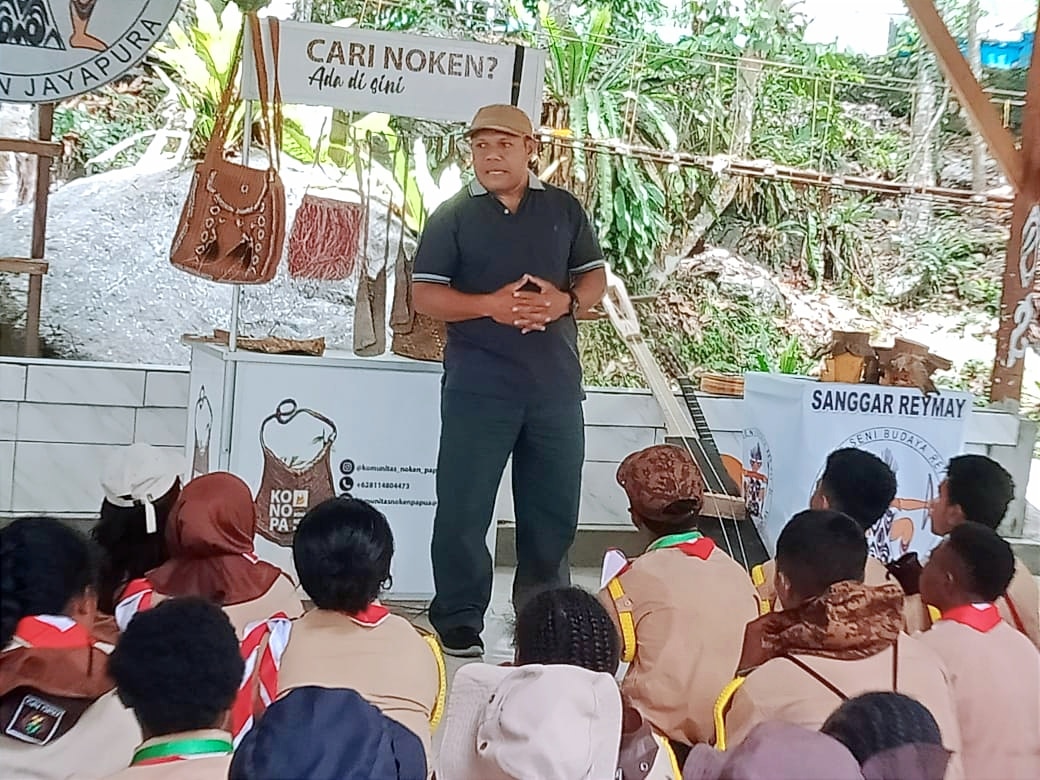
Soumilena noted that researchers have documented the Tepra people’s customary knowledge—including Tiaitiki—in locally produced educational materials in an effort to encourage younger generations to value their cultural heritage.
In his book Tiatiki: Concept and Practice, researcher Dr. Wiklif Yarisetou argues that Indigenous knowledge should serve as a foundation for coastal and marine development policies.
He describes Tiaitiki as a community-based conservation model that protects coastal and marine resources while demonstrating how local wisdom can support sustainable environmental management.
Yarisetou also emphasized the important role of customary institutions in maintaining Indigenous conservation practices and ensuring that coastal ecosystems are preserved for future generations.
During the 1990s, the Tiaitiki tradition attracted visitors from Japan through initiatives supported by the Village Community Development Foundation (YPMD), which also introduced tourists to traditional fish aggregating devices used by local communities.
One of the best-known examples took place in Tablanusu Village on Sept. 9, 1999, when the community ceremonially reopened a marine area that had been closed under Tiaitiki rules for six months.
“Parents, mothers, and young people paddled their canoes to the customary fishing grounds at Bityayo (Old Village) to catch fish, everyone was busy harvesting the sea together.” recalled Menase Soumilena. (*)