Sentani, Jubi – Silence and tranquillity have become a source of inspiration for Beatrix Antonieta Manggo as she builds Ticia, a Papuan arts and crafts brand aimed at bringing the region’s cultural heritage to a wider audience.
Through Ticia, Manggo wants to create products that offer more than aesthetic value — carrying stories, identity and the cultural richness of Papua.
Manggo, whose family has roots in Puncak Regency in Central Papua, develops a range of craft products drawing on Papua’s cultural and natural wealth.
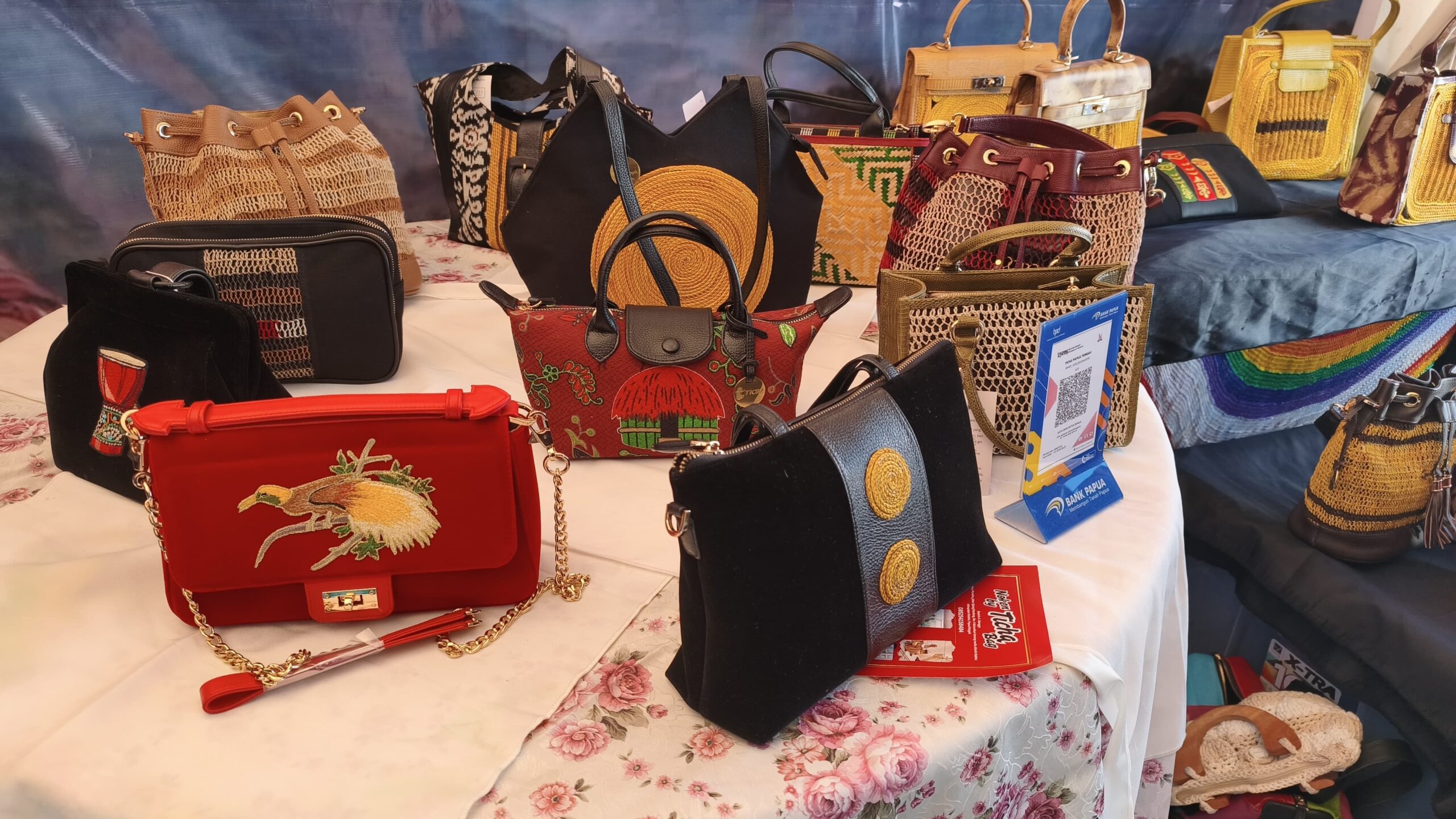
Traditional noken bags, batik, woven textiles, leather, and motifs inspired by Papua’s flora and fauna are incorporated into more contemporary fashion products.
She showcased the products at the 15th Sentani Lake Festival (FDS XV) in Jayapura Regency, Papua, as part of her efforts to introduce Papuan crafts and expand their market opportunities.
The name Ticia was chosen after a long search for a name that could represent both the products and the identity behind her work.
Manggo said the name was inspired by Slavic languages, including Czech and Slovak, where it is associated with silence and tranquillity. She connected that meaning with the creative process behind making art.
“To create a piece of work, we really need to be still and calm. From there, new inspirations emerge and can lead to the creation of our best work,” Beatrix told Jubi at the 15th Sentani Lake Festival at Kalkote Beach in Harapan Village, East Sentani District, Jayapura Regency, on Saturday.
That philosophy has become part of Ticia’s journey as a brand that promotes Papua’s cultural richness through crafts and fashion.
Manggo does not want noken to be seen simply as a traditional item used to carry garden produce or everyday necessities.
She believes the traditional Papuan bag has significant potential to be developed into contemporary fashion products while preserving its identity and traditional production techniques.
She combines noken with other materials, including leather and batik, creating bags and fashion products suitable for both formal occasions and everyday use.
“I wanted to find a way to collaborate with noken bags and make them more contemporary by combining them with leather and other materials,” she said.
She began developing the concept in 2024, and her modified noken products were later introduced overseas, including in Busan, South Korea.
Through a partnership, she brought the products to South Korea, where they were displayed in a store featuring a range of traditional Indonesian textiles and fashion products.
The experience strengthened her belief that Papuan products could find a place in international markets if they were developed through innovation and high-quality production.
Beyond noken, Manggo also develops batik designs featuring Papuan symbols, flora, fauna and stories from local communities.
Rather than relying solely on widely recognised Papuan images such as the bird-of-paradise, tifa drums, honai houses or koteka, she has sought inspiration in other subjects that carry meaning within Papuan communities. And one of them is the cuscus.
For Manggo, the cuscus is more than simply an animal that lives in Papua’s forests. It has a connection to the lives and experiences of local communities, particularly those living in the highlands.
Stories and community experiences surrounding the cuscus have been translated into batik motifs.
“Things that other people may consider unimportant, I turn into icons or distinctive images that can elevate those images and become part of my batik products,” she said.
She also combines batik, noken, woven textiles and traditional musical instruments such as the pikon in some of her work.
For Manggo, innovation is one way to ensure Papuan culture remains alive and continues to adapt to changing times without losing its identity.
Manggo believes preserving culture is not simply about introducing it to younger generations. Culture must also be given space to be used, adapted and developed in everyday life.
One way to do that, she says, is by incorporating cultural elements into clothing, bags and other fashion products.
“If we create them in the form of noken and clothing, then our cultural heritage will continue to be preserved and will not disappear,” she said.
According to Manggo, young Papuans should not simply become spectators of their own culture. They must also be given opportunities to create and innovate.
“Young people today are introduced to these traditions. But if they do not act or innovate, then these traditions will disappear,” she said.
She sees fashion as an effective way of bringing Papuan identity into public spaces. When someone wears a bag or clothing made from noken and featuring Papuan motifs, that cultural identity is also introduced to others.
Innovation has also increased the economic value of noken products.
The prices of Manggo’s creations vary depending on the materials used, their size, the complexity of the work and the design.
Noken products featuring intricate weaving and combinations of leather can sell for more than Rp10 million, while some of her creations have sold for around Rp15 million. Simpler designs are priced at approximately Rp3.5 million.
For Manggo, however, the price represents more than the value of a bag. It reflects the work involved, the skills of the artisans, the materials used, the cultural stories behind the product and Papuan identity.
She has encouraged Papuan women — often referred to locally as mama-mama Papua — not to limit themselves to producing the same traditional noken designs.
Instead, she believes there are opportunities for collaboration with different materials. Noken can be combined with batik, woven textiles and leather to create new products with greater value.
Not every product needs to be expensive, she said. What matters most is ensuring the identity of noken and Papuan culture remains visible.
Manggo’s experiences introducing Papuan products overseas have further convinced her that Papuan crafts have significant potential in global markets.
She has previously taken noken products to the Netherlands, where she said the response demonstrated the distinctive appeal of Papuan cultural products.
Manggo said she was moved when she saw people cry with pride after seeing Papuan noken displayed overseas.
“People overseas are very proud of our products,” she said.
The experience, she said, demonstrated that cultural products carry more than economic value. They also represent emotional connections and the identity of a community.
Her participation in the 15th Sentani Lake Festival provided an opportunity to introduce her work to a wider audience, but Manggo said significant challenges remained in developing local craft industries.
She said many of the stalls at the festival were dominated by food and local culinary products, while craft and handmade products remained relatively limited and often featured similar designs.
“When it comes to handicrafts, I see that they are still limited and many of them are quite ordinary. Almost all of them have similar models,” she said.
In her view, festivals such as the Sentani Lake Festival should not simply be places to sell products or stage cultural performances. They can also become spaces for learning, particularly for young people.
Manggo said she had seen many schoolchildren visiting stalls throughout the festival grounds, creating an opportunity to educate them about production processes, creativity, entrepreneurship and the potential for culture to become a source of economic opportunity.
“This gives them a new form of education — helping them understand how they can become entrepreneurs when they grow up,” she said.
She hopes the government and event organisers will bring together more outstanding products from different regions.
Doing so, she said, could give Papuan mama-mama and local business owners new examples and inspiration for developing their own products. Another experience during the festival caught Manggo’s attention.
A number of buyers who showed particular interest in her products were migrants from outside Papua.
She said they recognised both the quality and cultural value of Papuan products.
“What surprises me is that newcomers are the ones who appreciate our culture. Since yesterday, they have been buying because perhaps they understand that these products are of good quality and are genuinely helping to preserve our culture,” she said.

The experience prompted Manggo to reflect on the need for Papuans themselves to place greater value on their own cultural products.
She believes cultural wealth should not simply be a source of pride. It must be cared for, developed and given added value so it can compete with products from other regions.
As an example, she uses premium cotton for the batik she produces. The quality of materials, she said, is important to ensuring Papuan products not only carry a strong cultural identity but are also competitive in the marketplace.
Manggo hopes governments will do more than provide exhibition spaces for local businesses through festivals and trade shows.
She said long-term support was needed through training, improvements in human resources, design and marketing assistance, and access to capital.
“First of all, there needs to be more training for local artisans to develop their skills and human resources,” she said.
Once skills have improved, she believes the government should also help open access to markets and financing, allowing Papuan products to grow beyond local markets and reach national and international audiences.
Manggo said economic empowerment should begin at the grassroots level, particularly among Papuan mama-mama who rely on handicrafts and small-scale trading for their livelihoods.
“If we want to talk about a prosperous Papua, we must start with the mama-mama. We must start with local entrepreneurs and people at the grassroots level,” she said.
For Manggo, empowering Papuan women is not simply about increasing household incomes.
In their hands lies traditional knowledge and skills in weaving, knitting and processing natural materials — knowledge that forms an important part of Papuan cultural identity.
When those skills can generate income, she says, what grows is not only the family economy but also the sustainability of culture itself.
For Beatrix, Ticia is more than just a brand name. The philosophy of silence and tranquillity behind the name has become part of her creative process and the way she looks again at Papua’s cultural wealth.
She wants her products to move beyond being seen simply as traditional handicrafts and instead develop into works that carry economic value while bringing stories about Papua to different parts of the world.
Her experiences taking noken to South Korea and the Netherlands have convinced her that Papuan products have the potential to reach global markets.
But she recognises that achieving that goal requires collaboration between artisans, business owners, communities and governments.
She believes the Sentani Lake Festival can provide one space where cultural preservation, innovation and community economic development come together.
Because when the festival ends and the performance stages are dismantled, the stories of Papua can continue through noken, batik, woven textiles and other craft products carried home by visitors. In that way, Papuan culture is not simply put on display.
It continues to move, to be used, to evolve and to become known more widely — including in markets around the world.
The distinctive nature of Manggo’s products also attracted the attention of visitors to the 15th Sentani Lake Festival.
One of them was Magdalifa Siombing, who visited the stall displaying noken and batik products.
Magdalifa said the products offered a wide range of variations, with noken and batik modified and combined in different ways.
She said the combination of noken materials with motifs inspired by Papua’s flora and fauna gave the products a distinctive appearance. She was also drawn to Papuan batik, which she said had its own unique character.
“I have already bought some batik because one of the distinctive features of Papua is Papuan batik. When you wear it, it looks aesthetically beautiful and pleasing to the eye,” Magdalifa said.
She said the uniqueness of the products was not limited to their appearance but also lay in the stories and cultural elements contained within them.
Magdalifa hopes visitors to the festival will not simply come to buy products but will also take the opportunity to visit Manggo’s stall and learn about the process of making noken.
She said Manggo had extensive knowledge of noken and Papuan crafts, supported by years of experience and learning.
“Besides buying the products, we can also gain knowledge about weaving and making noken,” she said.
For visitors, she said, that experience provides additional value, because they do not simply take home an item, but also gain an understanding of how it was made and the cultural meaning carried within it. (*)
Author

About The Author