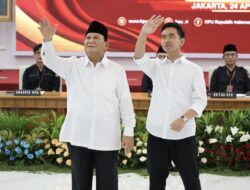
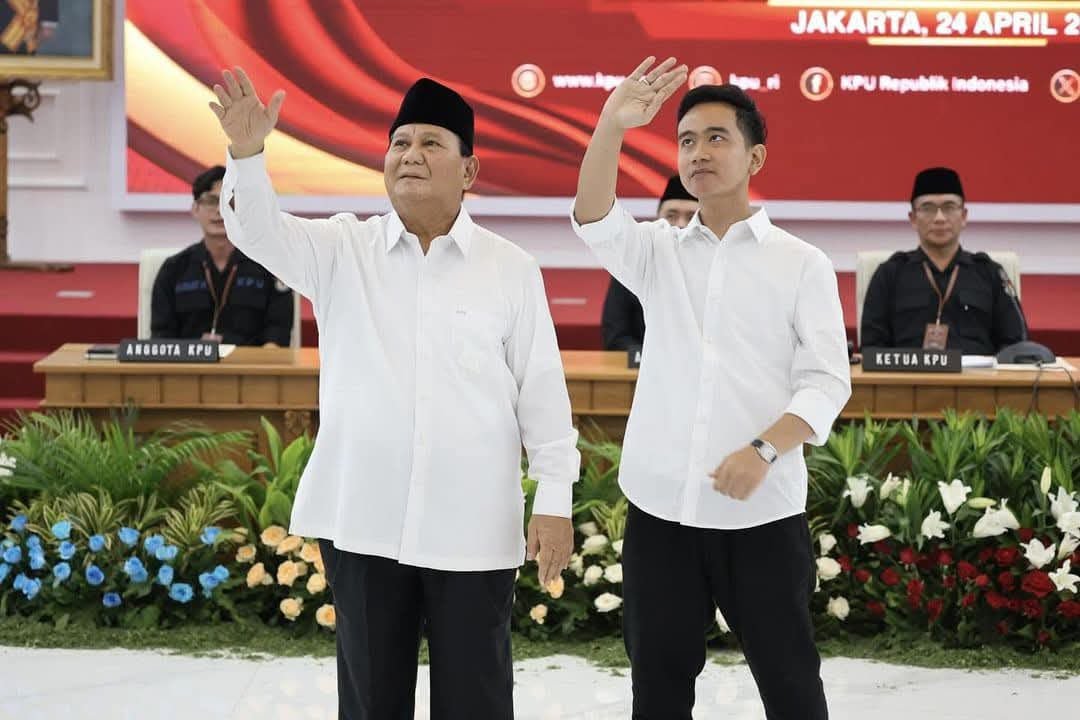
Jayapura, Jubi – The Papua Coalition for Law Enforcement and Human Rights has called on Indonesian President Prabowo Subianto to honour his campaign pledge to resolve Papua’s political issues peacefully, as mandated under Article 46 of Law No.2 of 2021.
The statement was issued on Tuesday, 20 October 2026, marking the second anniversary of the Prabowo-Gibran administration.
The coalition comprises several Papuan human rights and legal aid organisations, including LBH Papua, PAHAM Papua, ALDP, Elsham Papua, Kontras Papua and other civil society groups.

The coalition said Prabowo had pledged during his election campaign to uphold the law, strengthen security forces, accelerate economic development, combat terrorism and protect human rights in Papua.
However, it argues that the administration’s first two years had focused primarily on security and economic development, contributing to an increase in alleged human rights violations, displacement caused by armed conflict and violations of Indigenous communities’ right to their ancestral lands and livelihoods.
It also said victims of human rights abuses continued to face a lack of access to justice.
“Based on our monitoring of the Prabowo-Gibran administration over the past two years, the central government has focused heavily on security, as reflected in the mobilisation of non-organic military personnel,” the coalition said in a written statement.
The coalition said the Indonesian military had expanded its presence in Papua through the establishment of permanent military posts and new territorial development units, including 25 Territorial Development Infantry Battalions and the Food Brigade.
It also pointed to the establishment of two regional military commands over the past two years: Kodam XXIV/Mandala Trikora, based in Merauke in South Papua province in 2025, and Kodam XXIX/Mambruk, based in Nabire in Central Papua province in 2026.
The coalition said Papua now had four regional military commands and three regional police commands.
According to figures cited by the coalition, Papua had 83,177 regular military and police personnel in 2025, comprising 56,517 Indonesian military (TNI) personnel and 26,660 police officers.
It estimated that around 40 non-organic military task force battalions were deployed across Papua in 2026, with each battalion comprising between 400 and 450 personnel. The coalition put the total number of non-organic military personnel at 17,780.
It also cited 2,239 non-organic police personnel assigned to the Cartenz and Amole task forces.
Combining these figures with the 2025 figures for regular military and police personnel, the coalition estimated that the total security force presence in Papua reached 103,196 personnel. It said the number could increase further following the establishment of the new military command in Nabire.
The coalition also criticised the government’s continued development of National Strategic Project (PSN) across an area of about two million hectares in Merauke, South Papua.
It alleged that military units established under the Territorial Development Infantry Battalion programme were supporting the projects, which it said had resulted in the seizure of Indigenous customary land.
One example cited was the Kwipalo clan, whose customary land was allegedly taken by PT Murni Nusantara Mandiri.
“Part of the Kwipalo clan’s customary land was allocated to the military to build the headquarters of the 817/Aoba Territorial Development Infantry Battalion,” the coalition said.
The coalition argued that the government’s security-based approach had contributed to armed conflict between Indonesian security forces and the West Papua National Liberation Army (TPNPB).
It said several armed clashes had occurred between January and August 2026, contributing to an increase in the number of internally displaced people in Papua.
According to the coalition, the number of internally displaced people reached 124,931.
It also alleged that arbitrary arrest and torture of civilians in conflict-affected areas were frequently carried out by non-organic military personnel, citing incidents in Maybrat and Yahukimo regencies earlier in 2026.
The coalition further reported cases of alleged enforced disappearance, shootings, and unlawful killings of Papuan civilians.
It said the use of violence, threats of criminalisation and prosecutions against student activists had also restricted democratic space in Papua. Some student activists had allegedly been shot during the dispersal of peaceful demonstrations, while others had faced criminal charges.
The coalition said the administration’s focus on security and economic development had entrenched militarism in Papua in a systematic and structural way.
The coalition called on Prabowo to fulfil his campaign pledge to pursue a peaceful resolution to Papua’s political issues, in line with Article 46 of Law No. 2 of 2021, and to strengthen human rights protections.
It also urged the chair of the People’s Consultative Assembly (MPR) to coordinate wit the president to end the use od Military Operations Other That War (OMSP) to support the exploitation of Papua’s natural resources through National Strategic Projects.
The coalition called on the leaders of the House of Representatives (DOR) and the Regional Representatives Council (DPD) to revise the provisions governing OMSP under Law No.3 of 2025, arguing that they had enabled the military’s expanded role in resource exploitation projects that allegedly violate human rights and threaten Indigenous communities’ customary lands.
It urged the defence minister to stop using OMSP to support projects it says have violated Indigenous rights and contributed to the emergence of 9,152 conflict hotspots across customary territories in Papua.
The coalition also called on the human rights minister to strengthen the independence and implementation of Law No.39 of 1999 on Human Rights and Law No. 26 of 2000 on Human Rights Courts, increase funding for investigations into alleged gross human rights violations, and advance accountability through human rights courts.
It further urged the Supreme Court and Judicial Commission to establish a panel of judges for human rights cases at the cassation level and proceed with the Paniai Bloody case, involving alleged serious human rights violations.
Finally, the coalition called on regional leaders, members of the Papuan People’s Assembly (MRP) and provincial and local legislators across Papua to protect, respect and uphold human rights amid what it describer as growing pressure to exploit the region’s natural resources through National Strategic Projects backed by military operations. (*)
Author

About The Author