Jayapura, Jubi – Forest and land fires (karhutla) should not be attributed solely to El Niño and climate change, but must also be examined in the context of economic activities and corporate expansion that contribute to environmental destruction, said Franky Samperante, executive director of the Pusaka Bentala Rakyat Foundation.
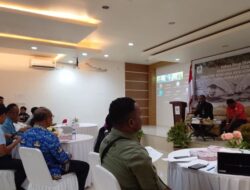
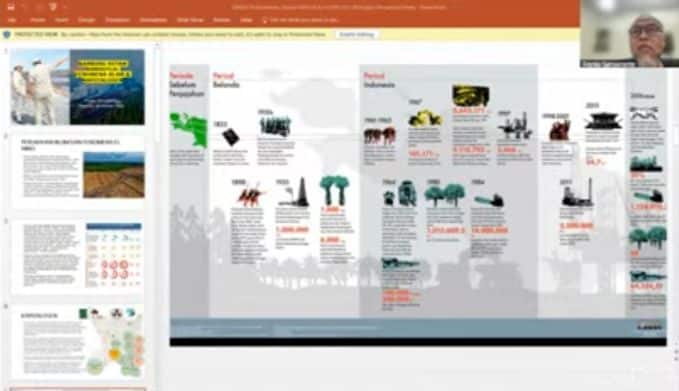
Samperante made the remarks while presenting a paper titled Scapegoating Forest Fires: Natural Phenomena and the Capitalocene during an online public discussion by the Alliance of Independent Journalists (AJI) Indonesia and AJI Jayapura on Friday, October 30, 2026.



The discussion focused on forest and land fires in South Papua province under the theme Environmental Impacts, Community Protection and Stakeholder Responsibility. It was broadcast on AJI Indonesia’s YouTube channel.
“Why is this happening? Because the state, corporations and certain members of the public continue to blame forest and land fires on the El Niño phenomenon and climate change. In reality, these fires are also caused by excessive human activities,” Samperante said.
He explained that, according to scientific assessments by the Intergovernmental Panel on Climate Change (IPCC), human activities are the main driver of global warming and climate change. These activities include the burning of fossil fuels, deforestation, agricultural expansion, large-scale livestock production and industrial activities.
He said the issue must also be examined through the lens of social, economic and political inequalities that allow natural resources to be exploited on a massive scale. The concept of the Capitalocene, he explained, highlights the close relationship between ecological crises, capitalism and production systems driven by profit and capital accumulation.
“Responsibility for the environmental crisis cannot simply be placed on communities, particularly those who are themselves victims of environmental destruction,” he said.
Samperante said data collected and analysed by his organisation showed that companies belonging to the Korindo Group and PT Tunas Sawa Erma held oil palm plantation concessions covering more than 200,000 hectares. In addition, three timber logging companies held concessions covering more than 300,000 hectares.
“Taken together, these companies hold oil palm plantation and timber logging concessions across South Papua,” he said.
He also raised concerns about the development of sugarcane plantations and the bioethanol industry. The projects, he said, involved approximately 560,000 hectares of forest and land allocated for business development in South Papua and several other regions. These included Sorong and South Sorong regencies in Southwest Papua province, as well as Teluk Bintuni regency in West Papua province.
“These are the actors contributing to climate change and the climate crisis, which in turn have implications for forest and land fires,” he said.
Samperante said the expansion of these industries could not be separated from Papua’s long history of natural resource exploitation. This includes oil and gas extraction, gold and mineral mining, oil palm plantation, timber logging and business operating under the banner of nature financialization.
He said South Papua had increasingly become a target for large-scale food and energy projects since the development of the Merauke Integrated Food and Energy Estate (MIFEE), which was later continued through the Food Estate programme as part of the National Strategic Projects (PSN).
The programme has since been further promoted through government policies supporting biodiesel and bioethanol production, including the expansion of sugarcane plantations.
However, the projects have raised concerns over spatial planning inconsistencies, the protection of conservation areas and recognition of Indigenous customary territories, including those belonging to the Yei people.
“Global markets are looking for alternative energy sources to serve their industries and economic interest. South Papua is the region being sacrificed,” he said.
“If we look at how these projects are being developed, the underlying approach has not changed. They continue to operating within a capitalist paradigm, using particular commercial actors.”
Samperante said his organisation’s monitoring of National Strategic Projects in South Papua had identified more than 53,000 hectares of deforestation between 2024 and September 2026. It had also recorded more than 8,000 hotspots across Papua between January and October 2026.
“We monitor these development using satellite imagery and integrate the findings with data from the Meteorology, Climatology and Geophysics Agency (BMKG),” he said.
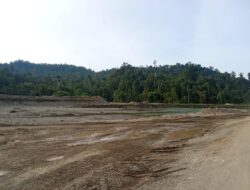
Samperante also presented documentation of fires in several areas targeted by National Strategic Projects and extractive economic activities between July and October 2026, including within company concession areas. One photograph showed piles of timber burning in Wanam in September.
In October, residents also reported the burning timber piles in an area operated by PT Murni Nusantara Mandiri, directly in front of the company’s camp.
“There was no response or prevention effort. The fire was allowed to burn across the entire area. This is a modus operandi and pattern sometimes seen in fires within concession areas, where burning is carried out to facilitate business expansion,” he said.
He said burning practices within concession areas needed to be investigated, as they could be linked to companies seeking to reduce costs and accelerate land clearing for commercial purposes.
Samperante stressed that Indigenous communities should not be made scapegoats for forest and land fires, noting that local communities had traditional knowledge and practices for managing and controlling fire.
He said Indigenous communities in several parts of Merauke were familiar with the use of firebreaks to prevent fires from spreading. They also maintained local climate calendars to anticipate dry seasons and potential fire risks, allowing them to prepare mitigation measures.
According to Samperante, traditional land-clearing practices carried out by Indigenous communities were limited in scale and guided by local knowledge and fire-control techniques.
“These practices are different from the large-scale fires found in several corporate concession areas,” he said.
He said law enforcement must not focus solely on small communities but should also investigate companies responsible for large-scale forest clearing and management.
“In our view, corporations should be the target because they are the ones controlling all of this,” he said.
Another speaker at the discussion, Paschalina Rahawarin, director of the Wasur Lestari Papua Foundation (YWLP), said South Papua was facing an increasingly serious threat from forest and land fires.
She said the province, which had not traditionally been widely recognised as one of Indonesia’s main fire hotspots, had now become one of the country’s worst affected areas.
“Fires have affected various ecosystems, from savannas and scrubland to wetlands and forest areas in Merauke, Mappi and Boven Digoel,” Rahawarin said.
Between January and July 2026, an estimated 41,789 hectares of land in South Papua showed signs of burning, she said. Merauke recorded the largest affected area, with 33,609 hectares.
“Furthermore, as of September 24, 2026, 2,977 hotspots had been recorded in South Papua, the highest number in Indonesia,” she said.
She added that fires had also affected Wasur National Park, a conservation area where approximately 8,708 hectares had been burned by August 2026. The figures, she said, demonstrated that South Papua had become a new epicentre of forest and land fires in Indonesia.
“In mid-October 2026, BMKG detected 573 fire hotspots in South Papua. Of these, 304 were in Merauke regency,” she said.
Rahawarin said the widespread fires threatened not only vegetation but also wildlife habitats. Animals were losing their habitats and food source as savannas, scrubland and forests burned. Smoke from the fires could also spread to surrounding areas, affecting air quality.
Other environmental consequences included declining water quality, particularly in water sources that communities relied on for their daily needs.
“From a health perspective, exposure to smoke from forest and land fires increases the risk of respiratory illnesses among communities,” she said.
According to Rahawarin, 333,470 cases of acute respiratory infections (ARI) had been recorded in fire-affected areas across Indonesia as of October 21, 2026.
“Those at greatest risk are children, older people, pregnant women and people with existing lung or heart conditions,” she said.
She said the situation was particularly concerning for people living in remote villages. Long distances from health facilities and limited transport access made it difficult for residents to obtain medical treatment when experiencing smoke-related health problems.
Beyond the environmental and health impacts, Rahawarin said forest and land fires also threatened the livelihoods of Indigenous communities. Sago groves, village gardens, forests, savannas, wetlands and rivers were all essential part of Indigenous people’s living spaces and provided important source of food.
“Ten districts in Merauke regency had been affected by forest and land fires as of October 9, 2026,” she said.
The vulnerability of local communities was further compounded by land clearing for National Strategic Projects, which targeted more than 50,000 residents across 40 villages. Indigenous women, she said, faced particularly complex impacts because of their important role in managing household food supplies.
Rahawarin said measures needed to address the fires included monitoring hotspots and extreme weather conditions, conducting joint patrols with communities, mapping fire-prone areas and preparing firefighting equipment and response teams at the village level.
She said rapid responses were essential when fires broke out, requiring the involvement of village firefighting teams and authorities.
Affected communities also needed masks, clean water, medicines, evacuation assistance, health education and accessible medical services.
She stressed that efforts should go beyond extinguishing fires and include restoring damaged ecosystems and community livelihoods.
“Assistance and community support are being carried out in collaboration with village governments, authorities and several organisations,” Rahawarin said.
However, she said communities in the region continued to face dual pressures from forest and land clearing for National Strategic Projects.
“Through this public discussion, we hope to raise collective awareness of the forest and land fire crisis in South Papua and encourage everyone to pay greater attention to this issue,” she said.(*)